Patients linking their medical records to ChatGPT rose more than 7,000% from July to August of this year at Advocate Health, the 69-hospital system based in Charlotte, its CIO Bobbie Byrne told Becker's. Patients link their MyChart accounts on OpenAI's ChatGPT site so that they can ask ChatGPT questions about the information stored in Advocate's EHR, and — brace yourself — Advocate's computing costs go up. Probably — with a 7,000% increase in connections — way up.
How it works
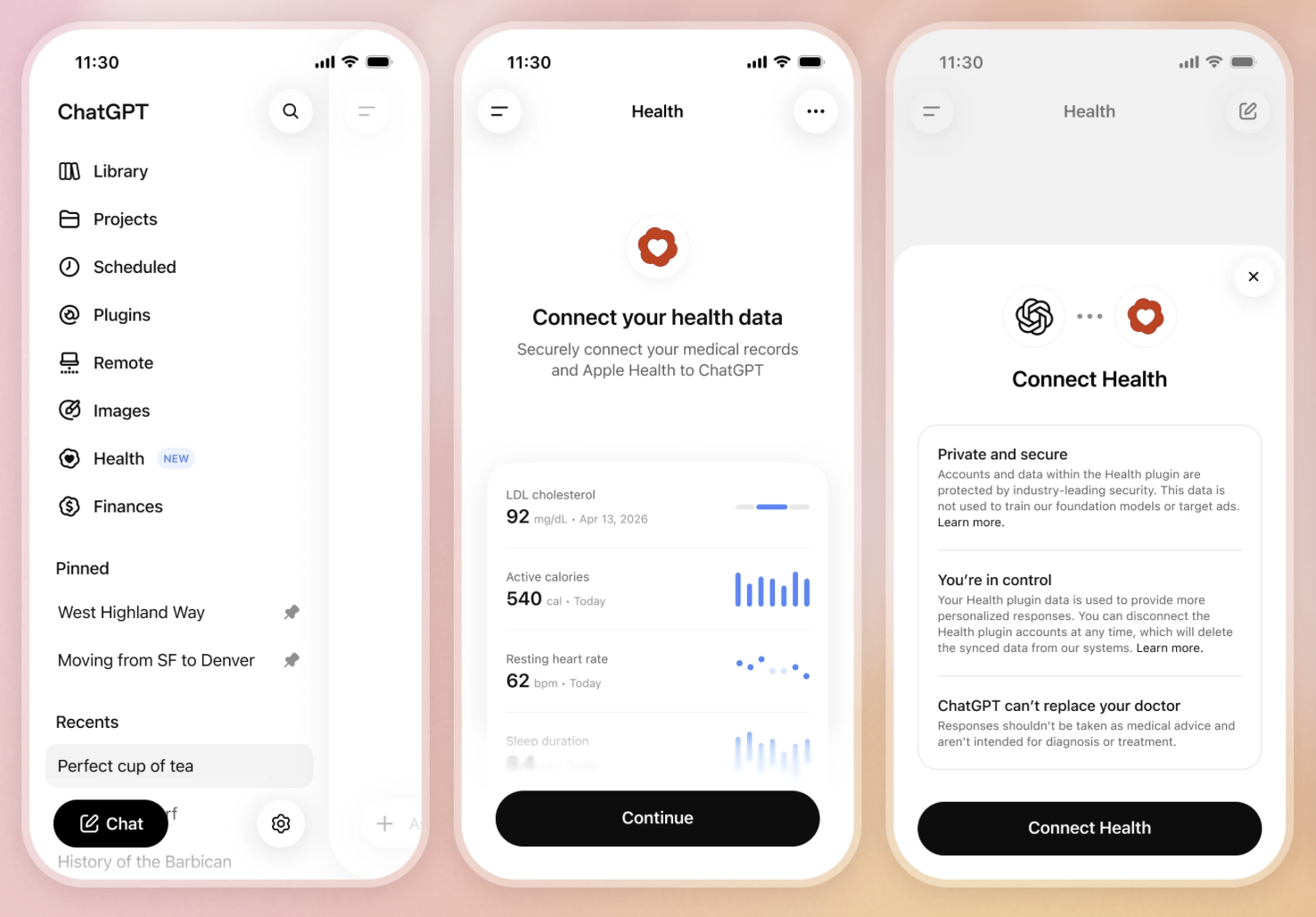
OpenAI launched ChatGPT Health in January and opened it to everyone in July. In ChatGPT Health, a patient picks their hospital, logs into its patient portal, and approves the link. The records then flow to ChatGPT (Fierce Healthcare).
Every time an account gets linked, and every time a patient asks a question, Advocate's Epic system has to look up and send records to ChatGPT. Byrne says Advocate can absorb the cost for now (I wonder if the CFO feels the same way) but would worry if growth keeps accelerating.
Epic and OpenAI are working to make the requests more efficient — which may shrink Advocate's bill, but it won't eliminate it.
Becker's didn't say what that bill was, and the starting number was probably small, since ChatGPT Health just became available to everyone a few months ago. But I would bet that this will be a tsunami of data requests and right now we're just at the stage of looking at the ocean wondering why something doesn't look quite right.
Why the hospital pays
Federal law blocks health systems from charging patients, or their apps, for electronic access to their own records. OpenAI doesn't pay either. Epic's patient-access APIs cost developers nothing, and each health system licenses them from Epic, at $4,500 to $47,000 a year per production instance, according to Epic's certification disclosure (Topflight).
Epic builds the APIs that allow ChatGPT and others to connect to the portals, licenses them to hospitals, and now works with OpenAI on efficiency.
Byrne supports patients using it if it helps them understand their health, though she notes that, like much of healthcare, there's a "disconnect between who benefits and who pays."
Banks went through this first
Financial aggregation apps like Empower (formerly Personal Capital) have been pulling customer data from banks for years. Just as with Advocate's example, banks have had to cough up the additional computing costs — and last year JPMorgan became the first major bank to start charging the aggregators for that access.
But . . . healthcare systems can't do that because it's against the law to charge patients, or the apps they use, for access to their own health records. Ouch.
Who gains
Patients, for sure. Lab result, radiology reports, or doctor notes can now be read at 6 p.m. or 1 in the morning by an AI that has the whole chart — and probably all the user's wearable and phone data — instead of waiting days for someone to reply to a portal message.
This is clearly Interpretation Migration, and it's growing fast — if you remember the recent Gallup and West Health poll I wrote about showing that AI may be replacing 14 million clinic visits a month.
OpenAI benefits, too. It gets the clinical record at no charge, delivered by the patient, which makes ChatGPT more useful than any consumer health app working from phone and wearable data alone. And since you can do this kind of thing with Claude, too, patients can expect some competition among AI providers as to what kind of useful interpretation they can provide.
Who loses
The hospital, twice.
First it pays to deliver the records, as Advocate is discovering. But even more importantly, the interpretation that patients used to get from healthcare (the follow-up visit, the portal message, the "what does this mean?" phone call) moves to ChatGPT.
Which is to say that ChatGPT now competes with Advocate to explain patients' results to them. And to make that even more painful, every time a patient asks ChatGPT a question that pulls data from Advocate, Advocate has to pay for its competitor's access to its own patients' records.
Traditional healthcare is now paying for its own disruption, and you can expect this to get worse.