The ATM, the iPhone, and Your Doctor's Office
Why Clinical AI Won’t Replace Your Doctor — But Wearables and GLP-1s Might
David Oks recently published a brilliant essay dismantling one of economics' favorite bedtime stories: the parable of the bank teller and the ATM. The standard version goes like this: ATMs arrived, everyone predicted mass unemployment for tellers, and yet teller employment rose. Technology doesn't destroy jobs. Relax.
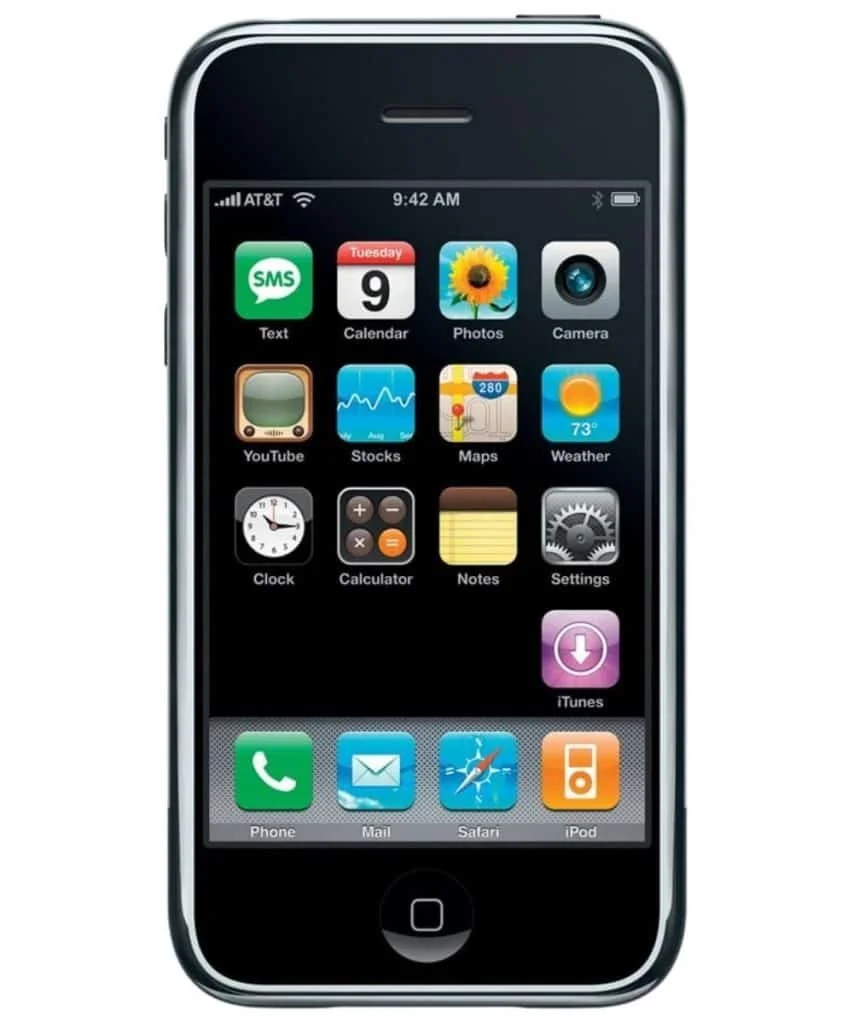
Branch killer
J.D. Vance cited this story in a New York Times interview. So have Daron Acemoglu, David Autor, Matt Yglesias, and Eric Schmidt. It became, as Oks puts it, a load-bearing parable for anyone arguing that technology creates more jobs than it destroys.
And through about 2010, the story was true. ATMs reduced the number of tellers per branch — from about 21 to 13 — but that made branches cheaper to operate. Banks opened more branches. Total teller employment held steady or even grew.
Then the iPhone showed up. And between 2010 and 2022, bank teller employment was cut roughly in half.
Task automation vs. paradigm replacement
Oks draws a clean distinction. The ATM tried to do the teller's job — handle cash, process deposits — faster and cheaper. It automated tasks within the existing paradigm. In Clayton Christensen's framework, the ATM was a sustaining technology for bank branches: it let them do what they were already doing more efficiently and less expensively. The customer still came to the branch. The branch still existed. The teller's role shifted from handling cash to selling products. And per Jevons's Paradox, as it got cheaper to run a branch, banks opened more of them.
But the iPhone didn't let the branch do its work more efficiently. It made the branch unnecessary. Mobile check deposit. Venmo. Real-time balance checks at 2 a.m. The iPhone created an entirely new paradigm in which the old one simply didn't need to exist.
Oks' key insight: it is paradigm replacement, not task automation, that actually displaces workers.
The real story is more complicated — in banking and in healthcare
Oks' essay got substantial pushback. Critics pointed out that the ATM/iPhone binary is too clean. Online banking was used by 44% of Americans, and UK bank branches were closing, by 2005, well before the first iPhone shipped. The 2008 financial crisis cratered the banking industry and is a major confounder in the teller employment data. And even the ATM-era "complementarity" story — the claim that ATMs complemented tellers rather than replacing them — was partly an illusion: ATMs did eliminate a third of teller jobs per branch, but deregulation-driven branch expansion masked that decline.
The real story is a constellation of digital tools — online banking, then mobile apps, then Venmo, then neobanks — that gradually made the branch less central, until one day it wasn't central at all. No single technology delivered the killing blow. The paradigm just gradually eroded.
The critics are right — and their more complicated version is a better match to healthcare than Oks' binary.
Healthcare's ATMs
Healthcare is living through the ATM phase right now — and telling itself the same reassuring story the banking industry told in 2005.
The "ATMs" of healthcare are clinical AI tools. Ambient scribes that write your notes. AI co-pilots that suggest differential diagnoses. Tools like OpenEvidence, DoxGPT, and Glass Health are genuine innovations. They make the doctor faster, reduce burnout, maybe even improve accuracy.
But notice what they don't do: they don't question whether you need to see the doctor in the first place. They automate tasks within the existing paradigm. The patient still goes to the clinic. The doctor still renders a judgment. The visit still gets billed. The teller's job description changes, but the teller survives — because the branch is still open.
This is what Oks calls "fitting capital into a labor-shaped hole." Health systems are taking a powerful new technology and cramming it into workflows designed around a human in an exam room. The result is a faster, cheaper version of the same encounter — just as the ATM produced a faster, cheaper version of the same branch visit.
And just as branch expansion masked the early decline in per-branch teller employment, volume growth from aging boomers and expanded access mandates may be masking a similar dynamic in healthcare — clinical AI reducing the need for certain staff roles, invisible for now in the aggregate numbers. The complementarity story looks great on paper, right up until the moment the underlying demand shifts.
Healthcare's iPhone
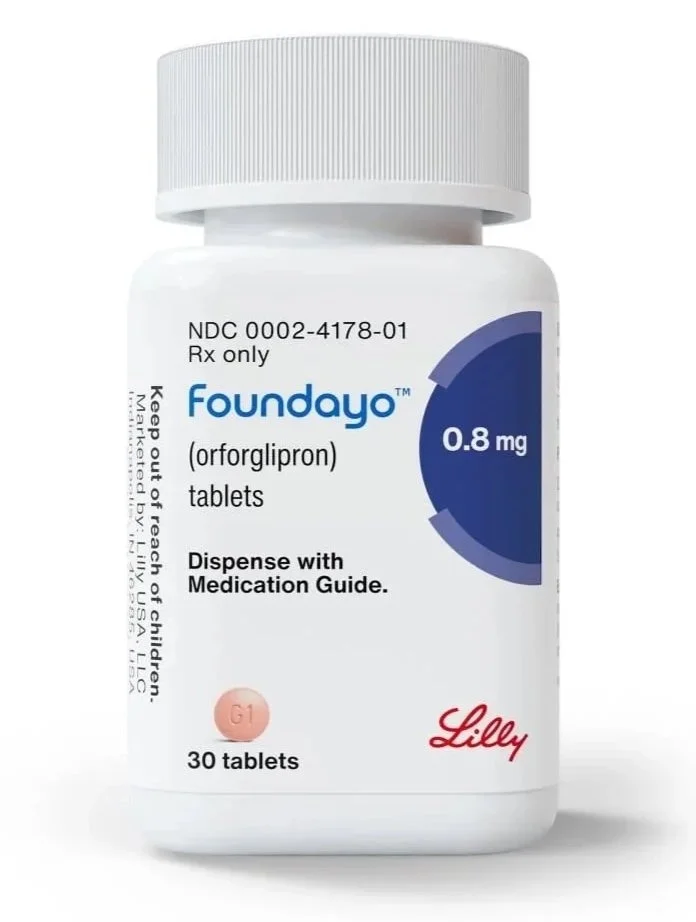
Clinic closer
Now look at what's happening outside the exam room.
An Apple Watch detects atrial fibrillation and alerts the wearer before they ever call a cardiologist. A consumer orders a lipid panel from a DTC lab, gets results on their phone, and adjusts their statin dose with an AI health assistant — no appointment necessary. A continuous glucose monitor coaches a pre-diabetic patient through dietary changes that prevent the diabetes diagnosis entirely. GLP-1 drugs eliminate the obesity that would have generated decades of cardiovascular, orthopedic, and endocrine visits. Early signals are visible: between 2022 and 2023, GLP-1 prescriptions for obesity more than doubled while bariatric surgery rates fell 25.6%. Some hospital bariatric programs have already closed.
None of these are trying to make the doctor visit better. They're making the doctor visit unnecessary.
And just like banking, there is no single "iPhone." There's a constellation of technologies — wearables, DTC labs, AI health assistants, GLP-1s, telehealth, and, yes, the iPhone itself — each removing one more reason to visit the doctor, none dramatic enough on its own to trigger alarm. The disruption is diffuse, which is precisely why it's invisible to the people running the system being disrupted.
Where the analogy breaks
Here's where the banking analogy breaks — and why healthcare is in a worse position than banking was.
When mobile banking killed branches and teller jobs, the banks captured much of the transition. JPMorgan Chase built the app. Citibank built the app. The technologies might have disrupted branches but they made the overall business of banking more profitable than ever — it just needs fewer buildings and fewer humans. The workers lost, but the corporations won.
Healthcare isn't getting that deal. The health tasks migrating out of the exam room aren't migrating to apps from Kaiser or Mass General or any other healthcare system. They're migrating to Apple, Whoop, Eli Lilly, and a growing ecosystem of DTC companies that the health system doesn't own, doesn't operate, and can't bill for. And some of the demand — the conditions that GLP-1s prevent, the injuries that autonomous vehicles will never cause — isn't migrating at all. It's simply disappearing.
In banking, the iPhone threatened workers and branches. In healthcare, the constellation threatens workers, facilities, andthe business model itself — because the value is being captured outside the organizations that have historically delivered care.
None of this will happen overnight. Healthcare has regulatory moats, liability exposure, and reimbursement plumbing that banking never had to navigate. The migration will be slower and messier than banking's was. But it is happening.
What the board should be asking
Oks' essay is about employment — does technology kill jobs? The ATM parable said no. The iPhone proved yes, just not the technology everyone was watching.
Applied to healthcare, the same logic holds. Clinical AI tools won't kill healthcare jobs (as the ATM didn't kill banking jobs). But the technologies replacing the doctor visit — wearables, DTC labs, AI health assistants, GLP-1s — will reduce how many we need (as mobile and online banking did). My prediction is that in ten years we will need fewer physician visits per population, not more. Fewer hospitals, not more. And fewer doctors as currently constituted, not more.
Those are the employment questions, and they track Oks precisely. But as I've argued, the employment problem is only half the story — healthcare isn't just losing workers, it's losing the demand itself, to entities it doesn't own.
Most health system boards are asking the ATM question: which AI tools should we buy to make our operations more efficient?
Almost none are asking the iPhone question: does the visit itself have a future — and if it doesn't, can we capture the value wherever it goes?
Banking answered that second question by building mobile banking apps. Healthcare hasn't started to ask it — while others are already building.
I've been writing about the forces reshaping healthcare — what I call the Five Migrations and demand elimination — for the past year. If this framework resonates, you might start with "The Economist Wrote About Healthcare Disruption — But Missed the Disruption" or "When Health AI Makes a Mistake, Who's Liable?"