Notes: GLP-1s Cut Bariatric Surgery 34%
According to a May JAMA Surgery article by Calzaretta et al (summarized by Harvard here), GLP-1 use rose more than 140% from 2022 to 2024. In a not-very-surprising simultaneous development, which I've been predicting for over a year, bariatric surgery volumes fell 34.1% in the same period.
Classic Demand Elimination.
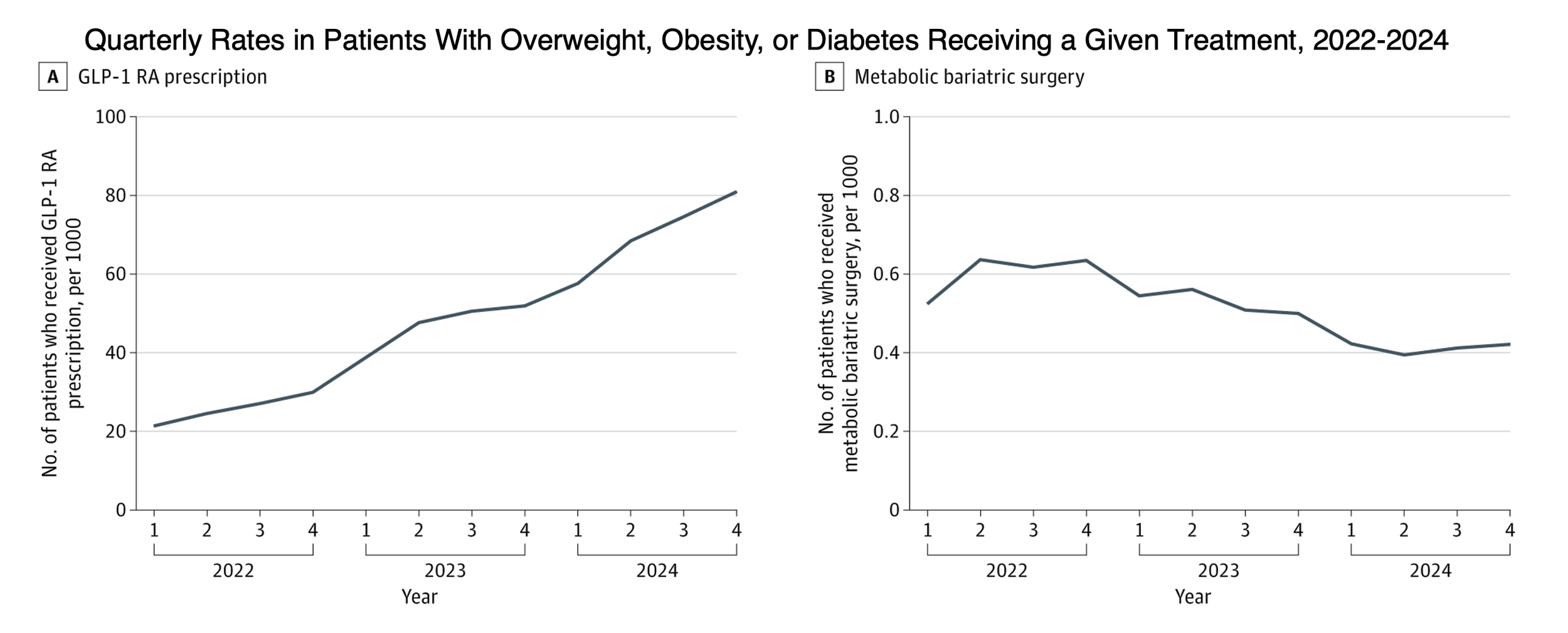
From Calzaretta RJ, Fink S, Kothari K, Tsai TC. Trends in Metabolic Bariatric Surgery Utilization in the Era of GLP-1s, 2022-2024. JAMA Surg. 2026;161(7):746–748. doi:10.1001/jamasurg.2026.1343
And over the study period the decline accelerated: roughly 14% in 2023, then 23% in 2024. Surgical volumes dropped below 200,000 procedures in 2024 for the first time since 2020.
A Wells Fargo Industry Insights report released last week points out the economic consequences, something my readers will already be familiar with. For years hospitals have been building service lines and revenue around all the downstream consequences of obesity: bariatric surgery, cardiology, orthopedics, sleep medicine, liver disease, diabetes, et al. GLP-1s reduce the obesity and should reduce all those downstream effects. (Fierce Healthcare coverage of the report).
Aside from this recent JAMA Surgery piece, we've seen other data confirming what's happening and what's to come. As one example, the SELECT trial showed a 20% reduction in major adverse cardiovascular events with semaglutide in overweight or obese adults without diabetes. There are also promising results in treating alcohol abuse.
One key insight from Calzaretta that may be overlooked: "more than 90% of the study population received neither form of treatment [i.e. surgery or GLP-1s] during the study period.
Translation: this is just getting started.
Plenty of near-term friction as pharmaceutical companies, employers, insurers and healthcare try to maneuver around this accelerating change. Drug spend is already lifting employer and payer costs, causing some large employers to consider dropping coverage for weight-loss drugs for 2027.
This, of course would be a colossal mistake from both the public health and the economic perspective: huge cost reductions will accrue as these meds reach more and more obese people. Employers just need to figure out how to finance that expansion, so they can reach the promised land of cost reduction in the future. More on this coming soon.