Bad Timing: Will GLP-1s Bankrupt Health Insurance Before They Save It?
Blue Cross Blue Shield of Massachusetts just posted its worst financial year ever. The culprit? A medication that's already reducing U.S. obesity rates.
Blue Cross Blue Shield of Massachusetts ended 2024 with a $400 million operating loss — the worst in the organization's history. The primary driver wasn't hospital costs, physician fees, or even the lingering effects of the pandemic.
It was GLP-1 medications.
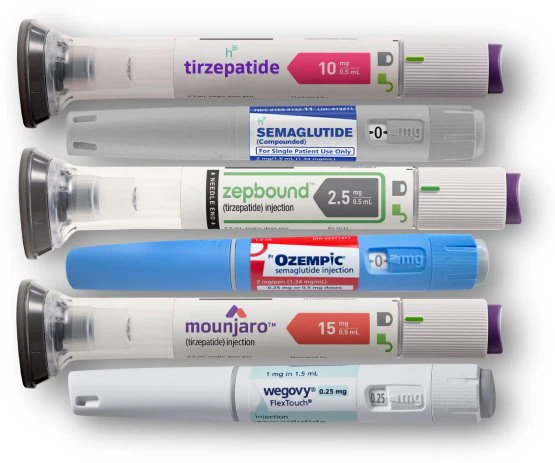
The drugs — Ozempic, Wegovy, Mounjaro, Zepbound — accounted for more than $300 million in spending, representing 20% of the insurer's total pharmacy costs and double what they spent the year before.
Massachusetts isn't alone. North Carolina's state employee health plan canceled GLP-1 coverage for weight loss entirely — saying that continuing it would have required doubling premiums for all 750,000 members. Colorado stopped covering new GLP-1 prescriptions, grandfathered existing users, and quadrupled their copays.
Here's the paradox: these same drugs are already delivering population-level results.
The Evidence Is In
This isn't theoretical anymore. According to Gallup's National Health and Well-Being Index, U.S. adult obesity has dropped from 39.9% in 2022 to 37% in 2025 — representing approximately 7.6 million fewer obese adults. The decline seems to correlate directly with GLP-1 adoption: the share of adults using these medications for weight loss has more than doubled, from 5.8% in early 2024 to 12.4% today.
And GLP-1 receptor agonists don't just help people lose weight. They appear to reduce cardiovascular events, protect kidney function, and — emerging data suggests — may even slow neurodegenerative disease (or maybe not).
We’re already seeing fewer bariatric surgeries. If these medications continue working at population scale, we should see fewer diabetes complications, fewer heart attacks, fewer joint replacements in patients whose weight made them poor surgical candidates. The downstream savings could be enormous.
But "downstream" is the operative word.
The Timing Problem
The pharmacy costs hit immediately. The medical cost savings — if they materialize for any given insurer — arrive years later. And in a health insurance system where members frequently change plans, the insurer paying for the drug today may not be the one who benefits when that member avoids a heart attack in 2031.
This is bad timing, not bad economics: a therapy that is eliminating demand for expensive downstream care is financially crushing the organizations that would presumably benefit from that demand reduction.
One counterargument: With 42% of American adults obese, every insurer has similar exposure to these costs. They're all bleeding together — and in aggregate, should all benefit together as the obesity rate continues to fall. But that's cold comfort when you're explaining a $400 million loss to your board.
What This Means for Health Systems
I've written before about how GLP-1s represent a potential demand shock for health systems — the first large-scale collapse in chronic disease volume in living memory. But if you're a health system executive, you might be tempted to see this insurance crisis as someone else's problem: let the payers figure out how to pay for it.
But there are serious implications for folks on the care side of the equation:
The insurers' eventual savings are your volume losses. When GLP-1s reduce cardiovascular events and diabetes complications, that's fewer procedures, fewer admissions, fewer chronic disease management visits flowing through your system. The math that eventually works for payers works against traditional fee-for-service health systems.
Coverage is contracting, not expanding. As losses mount, payers are pulling back. Employer coverage for GLP-1s for obesity faces pressure. Many insurers are adding prior authorization requirements or dropping coverage entirely. Blue Cross MA just announced it will stop covering GLP-1s for weight loss effective January 2026. The brief window of broad access may be closing.
The DTC market is filling the gap. Millions of Americans have obtained compounded GLP-1s through direct-to-consumer telehealth platforms — often after nothing more than a questionnaire. No lab work. No ongoing monitoring. No care coordination. The demand hasn't disappeared; it's migrating outside the system entirely.
Demand elimination is coming regardless. Whether patients get GLP-1s through your system, through their insurer, through Amazon, or through a compounding pharmacy in Florida, the downstream effects on surgical volumes and chronic disease management will arrive. The question isn't whether demand elimination happens — it's how you are planning to respond to it.
The Strategic Question
For health system boards, this moment demands clarity about a fundamental question: Are you primarily in the business of treating disease, or managing health?
If you're in the disease treatment business, GLP-1s represent a threat. Fewer obese patients means fewer bariatric procedures, fewer obesity-related joint replacements, fewer cardiovascular interventions. Your volumes decline.
If you're in the health management business, GLP-1s represent an opportunity. You become the trusted partner helping patients access, monitor, and optimize these therapies — capturing the value of the intervention rather than waiting for the complications.
The insurers bleeding cash right now made a bet: cover these medications, absorb the short-term losses, reap the long-term savings. That bet is failing because the economics don't work on a single-payer timeline and because patients don't stay with the same insurer for a decade.
Health systems have a different hand to play. You have continuity. You have the clinical relationships. You have the ability to integrate medication management with the downstream specialty care that may (or may not) still be needed.
The question is whether you're building that integration now, while you still have the patient relationship — or waiting until they've gotten their prescription from a telehealth app and only show up when something goes wrong.
The Shift Is Here
Blue Cross Blue Shield of Massachusetts didn't post a $400 million loss because of a temporary blip. They're experiencing the front edge of a structural, not cyclical, shift in how obesity — and eventually other chronic diseases — gets treated.
The bad timing won't resolve itself quickly. Years of costs will add up before the savings arrive. The payers will continue to struggle with the math. And the patients will continue to find ways to access these medications, with or without the traditional healthcare system's involvement.
—
Sources
Blue Cross Blue Shield of Massachusetts $400M loss
Gallup obesity data (39.9% → 37%)