Your Next Medical Test Will Be a Software Update
AI is finding new answers in the scans and signals we already collect.
First of two posts on medical (well, health-related) testing. Next week: what happens when the cost of running one more software-based test heads toward zero — and why cheaper testing may not mean cheaper healthcare.
“It’s about damn time.” — D. Griffin Jones on the new Siri update
My iPhone just automatically updated itself to iOS 27, and all of a sudden, at no extra cost, it has capabilities it didn’t have when I bought it. Chief among them: no kidding, Siri now actually answers my questions intelligently.
I didn’t buy another phone, replace any parts, or take it anywhere for an upgrade. New software made the device I already owned more useful. It’s amazing, but at this point we’ve become so accustomed to this that we barely stop to think about it.
This is already happening in health. I wrote about it in “Hidden Connections,” when Apple added hypertension notifications to watches people already owned. New software gave existing sensors another medical job.
Here I want to follow that process into the clinic. What happens when software finds something in an ordinary test that nobody ordered it to look for — and a doctor acts on the finding? We have some revealing examples, including one in which the scans had been sitting in the archive for years.
One test, several answers
As I discussed in my earlier post, this is happening across different kinds of tests. In one example that made the news, researchers at Google used AI to estimate cardiovascular risk from retinal photographs for the first time.
Mammograms, too. The arterial calcium visible in them — radiologists see it, but it’s not the reason for the scan — can be measured by AI to help estimate future cardiovascular risk. An Emory and Mayo team demonstrated this in a study of more than 123,000 women.
The question increasingly becomes what we do with that additional information.
Liver calling the heart
Now consider the ECG: a recording of the heart’s electrical activity that we’ve been doing for about 100 years. We know that liver cirrhosis affects the heart as well as the liver, and Mayo researchers showed those heart changes could be identified on an ECG. The test has always contained that information, but we just hadn’t been reading it.
In a follow-up clinical trial published last December, more than 15,000 patients received ECGs as part of routine care. Clinicians caring for roughly half of them received an alert when the AI identified a higher risk of advanced liver disease. Within six months, advanced fibrosis or cirrhosis had been newly diagnosed in 1% of that group, versus 0.5% with usual care.
Patients still needed follow-up testing to establish the diagnosis. But the reason to do liver testing came from existing ECGs, analyzed by new software. Nobody had to invent, or buy, a better ECG machine.
There’s a name for this: opportunistic screening — pulling additional clinically useful information out of a test ordered for some other reason. In this case, the software’s finding was presented to a clinician, prompted further investigation, and led to additional diagnoses and, presumably, treatment when required.
The scan was already in the archive
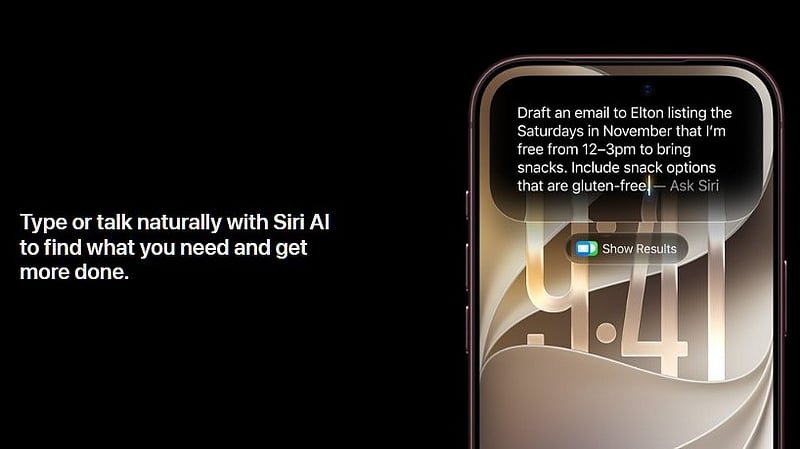
“It’s about damn time.” — D. Griffin Jones on the new Siri update
Stanford researchers decided to look at chest CTs that had already been performed for a variety of reasons. They ran AI over the images to identify coronary calcium, had radiologists confirm it, and randomly assigned patients to notification or usual care. The notifications went to patients and to their clinicians.
Six months later, because of the new finding in the old CT, 51% in the notification group had been prescribed a statin, versus 7% with usual care.
Think about this: the radiology archive had useful information, information that might add years to patients’ lives — but no one was looking. Why? Probably because even though we have known for awhile that the calcium signal was there, radiologists don’t have the time to add one more review to every chest CT they look at. But software has that time.
Not to say that there’s no potential downside: every new flag could trigger another test, procedure, diagnosis, or treatment. Overdiagnosis doesn’t become harmless because it’s easy, or cheap.
But the cirrhosis and Stanford studies show that these software changes can change what gets diagnosed or prescribed. Whether the additional diagnoses and prescriptions help people live longer or better is the further question we need to answer, in each case.
When the additional test is electrons
In 2011, Marc Andreessen wrote in The Wall Street Journal that “software is eating the world.” It was true for travel agents in 2011, and it’s now becoming true for medicine. As one part of that, we can increasingly use software to apply additional tests to information we already have without taking another specimen, or exposing the patient to more radiation, or scheduling another appointment.
Developing and validating that software costs money, and following up on its findings can run up the medical bill. But applying it to one more existing scan is a very different proposition from having to bring the patient in again, take another image, or draw more blood. That’s what makes these software developments so consequential.
This process isn’t limited to the hospital or clinic. I started this post talking about Siri updates, but my phone and my watch now offer fall detection, walking-steadiness monitoring, hypertension alerts, and many other useful health features, including screening tests.
The next question is what happens to healthcare when the cost of running one more software-based test approaches zero — whether in a hospital or at home. Will patients/consumers actually pay less? And will cheaper testing reduce healthcare spending — or increase it by leading to more follow-up tests and treatment?
I’ll write about that shortly.