Signals: Google Joins Apple in Pricing Health Interpretation at Zero
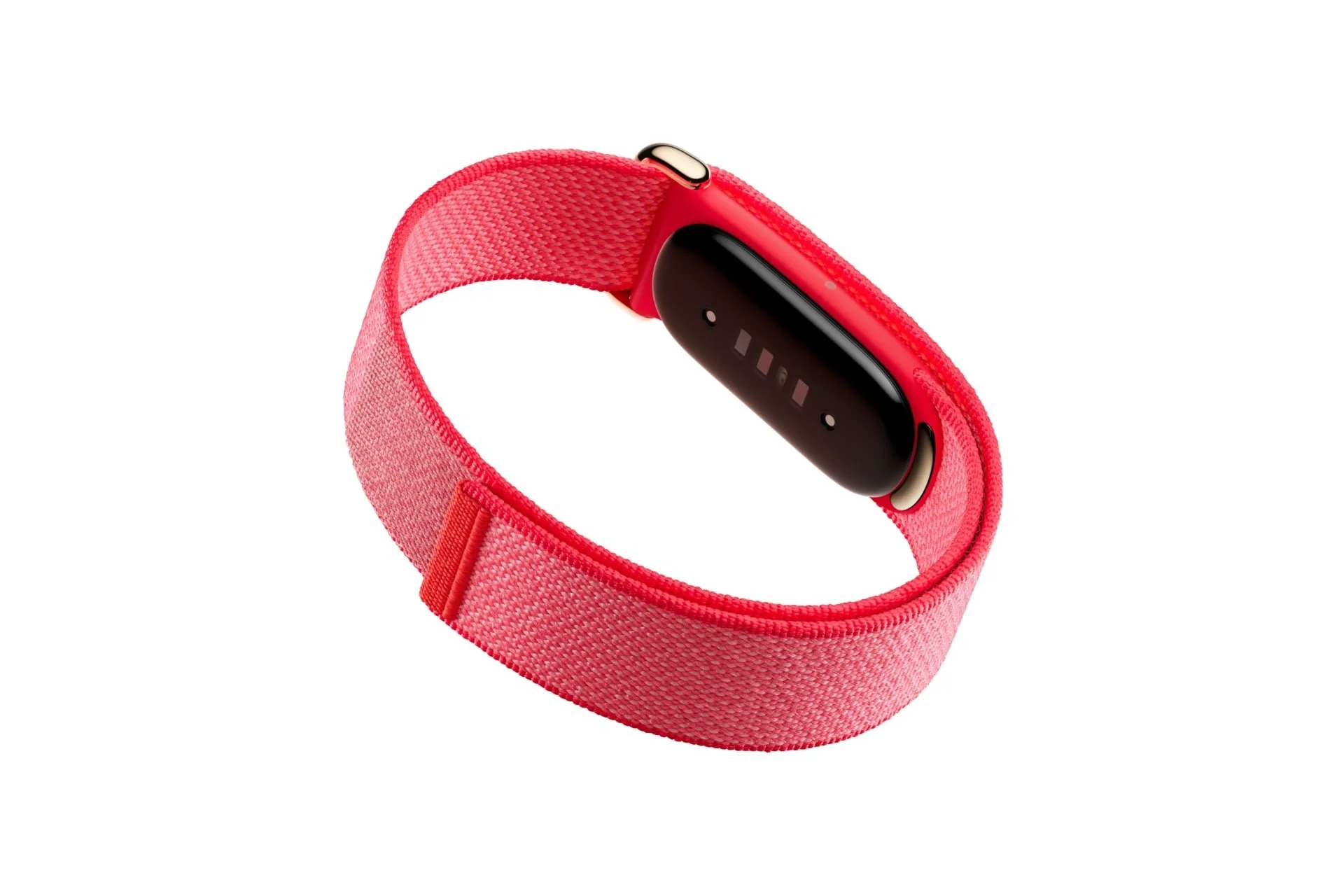
Screenless: the new Fitbit Air
Google launched the Fitbit Air on Wednesday at $99.99 with no required subscription. The Fitbit app is being rebranded Google Health on May 19, with an optional $9.99-a-month AI coach tier on top. Pre-orders opened the same day.
The launch is being covered as Google entering the Whoop and Oura category. I think the more useful framing is that Google joined Apple, years late, in pricing the interpretation layer at zero.
Since 2015, Apple Health and the Apple Watch have given users data plus interpretation. They’re now including VO2 max, heart rate variability, sleep stages, AFib detection, walking steadiness, cycle tracking, fall detection, trend analysis — all included with the hardware. Apple does not charge a recurring fee to look at your own data or to receive basic interpretation of it.
Whoop and Oura are in a different camp. Whoop sells no hardware at all — the strap is a sunk cost the company recovers through a mandatory $199-to-$359-a-year membership. Oura sells the ring at $349 and up, but the free tier shows three numbers, which means the $69.99-a-year membership is pretty much required.
For comparison, an annual physical with basic labs runs roughly $300 cash-pay at a primary care office.
With Google’s latest move, the math looks a bit different than it was just a week ago.
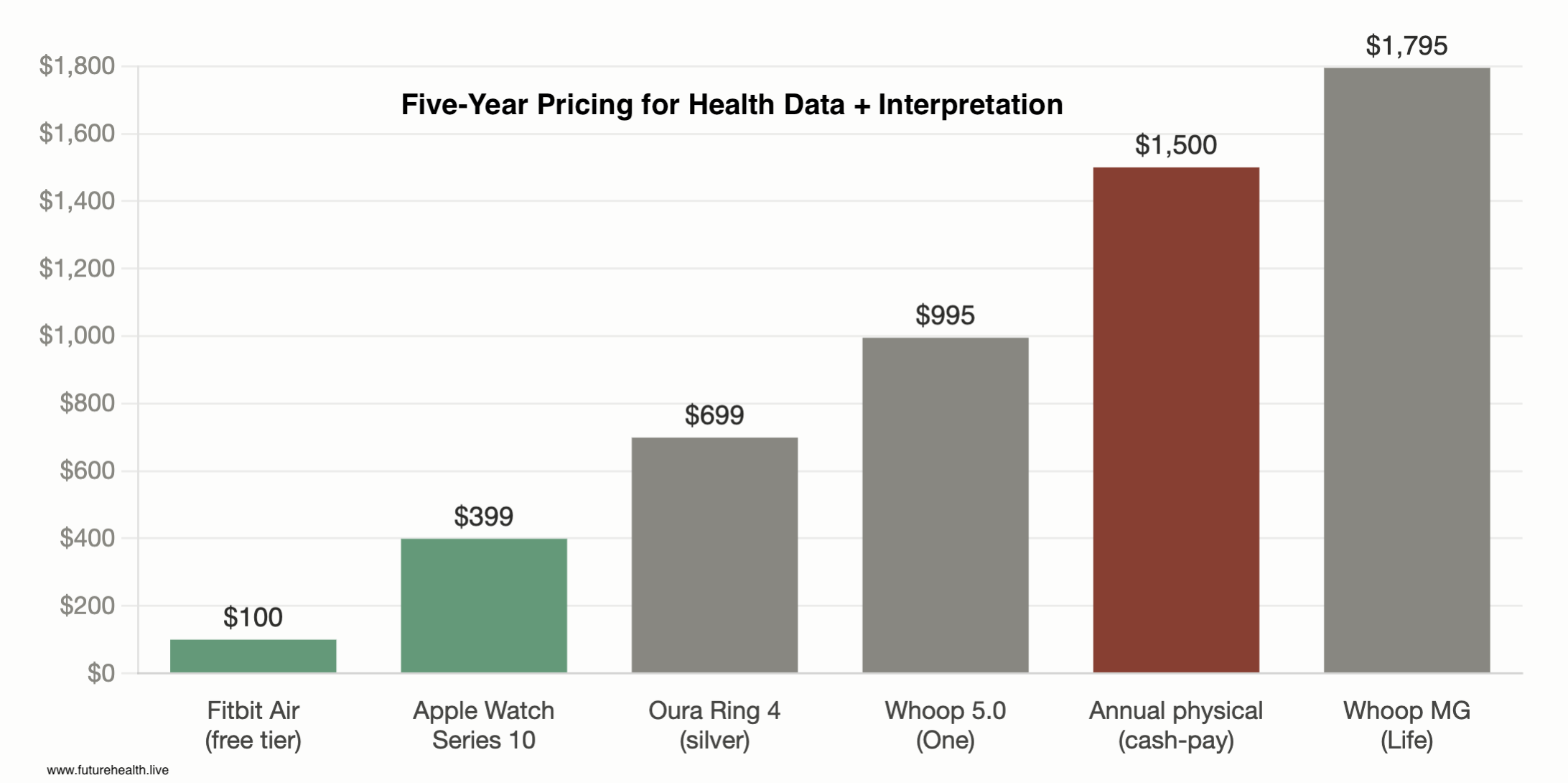
| Product | Hardware | Mandatory software | Optional software | Year 1 | 5-year |
|---|---|---|---|---|---|
| Apple Watch Series 10 (42mm) | $399 | Free | None | $399 | $399 |
| Fitbit Air + Google Health (free tier) | $99.99 | Free | $99.99/yr (AI Coach) | $99.99 | $99.99 |
| Oura Ring 4 (silver) | $349 | $69.99/yr (de facto) | — | $418.99 | $698.95 |
| Whoop 5.0 (One — cheapest tier) | Free | $199/yr | $239/yr (Peak upgrade) | $199 | $995 |
| Whoop MG (Life — ECG, BP) | Free | $359/yr | — | $359 | $1,795 |
| Annual physical exam (cash-pay, with labs) | — | ~$300/yr | — | ~$300 | ~$1,500 |
Five years of continuous biometric tracking with interpretation now runs $99 on the Fitbit Air, $399 on Apple Watch, $699 on Oura, $995 on Whoop One, and $1,795 on Whoop MG. The Fitbit Air at $99 — for five years — is cheaper than six months of Whoop at the cheapest tier — and cheaper than a single year’s annual checkup.
To be fair to the annual checkup, that typically includes things wearables don't — physical exam, vaccinations, lab draws and lab interpretation, prescription authority. But on labs specifically, DTC services like Function Health ($499/yr for 100+ biomarkers), Marek, and Hone Health now offer broader panels than the standard physical orders, with results delivered to a phone. And the checkup function — vitals, "let's see how you're doing," general guidance, "your numbers look fine" — is exactly what the platforms now do continuously, every day instead of once a year.
Two takeaways.
The first is for Whoop and Oura. Their total five-year cost runs seven to eighteen times what the Fitbit Air costs. They now have to explain what the buyer gets for the difference, in a category where one of the largest companies on earth is now giving it away. Some of that explanation might be real (Whoop pushes athlete-tier coaching, for example) but most of it is going to be hard to justify.
The second takeaway is for health systems: the annual physical is dying. Ganguli at Harvard told us that back in 2019 and that was before the Interpretation Migration enabled by AI was even hitting its stride. Now that interpretation is moving to scale, patients are dropping out in droves. A lot of the whole reason for the checkup — vitals, "let's see how you're doing," general guidance — is now available continuously, in the background, for $99. And consumers can now track very useful biometrics that were never available at the checkup — VO2 max being the cleanest example.