Notes: the Prescription You Can’t See
Rock Health's December survey of 8,000 U.S. adults asked AI chatbot users a follow-up question that hasn't gotten much coverage: what did you do after the conversation?
Eighteen percent said they adjusted a medication.
Not researched a medication. Adjusted a medication: changed dose, stopped, started. Among the roughly one in three adults now using AI chatbots for health, nearly one in five has changed their own prescription based on a chat window.
Where the decision happened
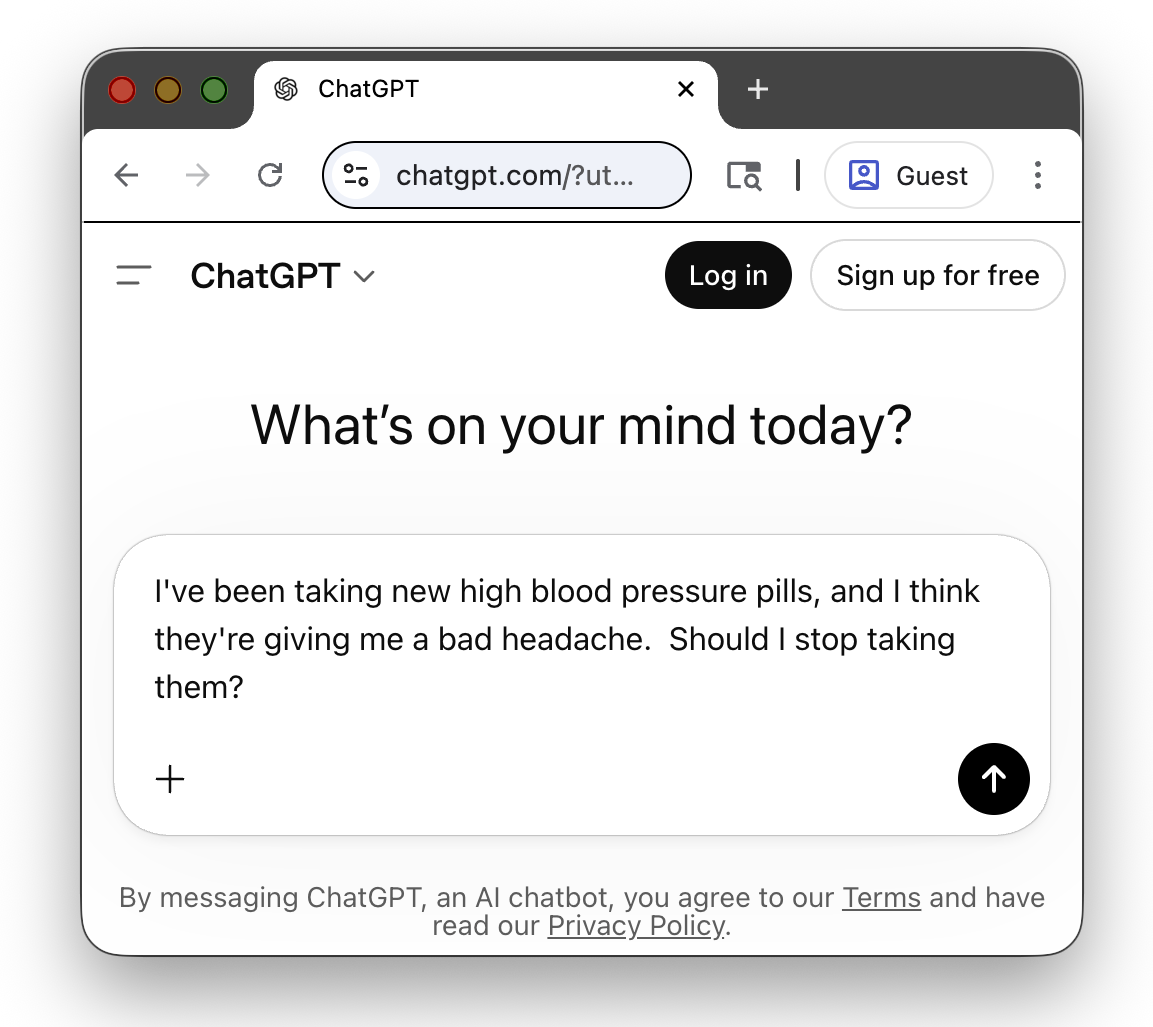
Prescription modifier
Seventy-three percent of those AI users went to ChatGPT. Five percent used a chatbot offered by their provider. Four percent used a payer's.
One place this prescription medication adjustment didn’t happen: a patient portal or a nurse line. Or a clinic. Ninety percent happened in a window the health system doesn't operate, doesn't see, and can't review. Whatever the chatbot said, whatever the patient thought it said, whatever they decided to do — none of it is known to the institution that wrote the original prescription.
It’s not a one-time thing
Sixty-four percent of AI health users engage weekly or more. About one in five do it daily. The 18% medication-adjustment figure is describing a behavior embedded in an ongoing consultation pattern — one where the consultant is a chatbot and the original prescriber finds out at the next visit, if there is one.
The chart has no field for this
The EHR shows the regimen the clinician prescribed. The patient is on something else. Medication reconciliation at the next encounter is supposed to catch the gap, and sometimes it might. Ernst and colleagues, working before consumers had a clinical advisor in their pocket, found discrepancies in 26.3% of charts at the point of prescription renewal: the EHR didn't match what the patient was doing. That was the baseline.
Now that baseline is changing, and not for the better. Every additional channel through which a patient can get a plausible-sounding answer about their medication is another source of off-record adjustment. Eighteen percent of AI users acting on chatbot input is one such channel, and it's the biggest one yet.
What I missed last week
Last week in The $50B Measurement Blind Spot I argued that demand migration (from healthcare to consumer tech) shows up as visits the claims data can't see — going back to the Ganguli finding that primary care visits fell 24% from 2008 to 2016, with three-quarters of the decline invisible to standard utilization measures.
But it turns out that even inside the healthcare visits that do still happen, a meaningful share of what gets subsequently decided is being decided somewhere other than the clinic or ED or urgent care. The divergence between the prescribed regimen and the actual regimen is increasing, and the divergence is happening through a channel that produces no claim, no portal message, no chart entry.
The strategic question for a health system isn't whether AI chatbots will eventually affect prescribing behavior. It's how much of the prescription record on the books today is already fictional. And what does that mean for healthcare.