Ozempic Is Already Kind of OTC. Let's Make It Official.
A Yale medical student spent four months last fall posing as a patient on 49 telehealth websites: a 26-year-old man, BMI 35, with high cholesterol, high blood pressure, and prediabetes. Forty-five sites prescribed him a GLP-1. Thirty-four mailed it. Two shipped within five minutes.
The study, published in JAMA on July 6, documents what prescribing now requires: at 92% of sites, a self-reported questionnaire and an upper-body photo. The sites required no physician conversation, no records, no labs, no identity check. Four sites denied the application — two wanted blood work, one realized the same patient had already received a prescription elsewhere, one noticed the photo didn't match the reported weight.
From the patient side this is more like online shopping than traditional healthcare: answer some questions, pay, and the product arrives. That may not officially count as OTC, but it's indistinguishable in practice.
So what’s the harm
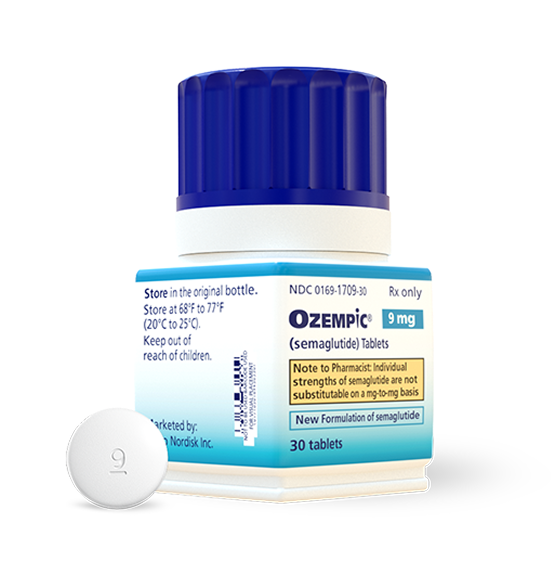
Now in aisle 2?
The Yale study describes web forms reviewed by licensed clinicians signing prescriptions at a pace — five minutes, in two cases — that suggests that not a lot of thought was applied. Millions of these prescriptions have gone out through this super-brief screening over two to three years. If it were truly dangerous, I suspect the harm would be broadly visible by now.
But ... it mostly isn't. GLP-1 adverse-event reports and poison-control calls have climbed sharply, but use is climbing faster, and the systems that tally the events count totals, not rates. And those events are mostly minor — nausea and vomiting — while serious outcomes stay a small fraction.
Dosing errors are probably the one adverse event worth paying attention to, and maybe the best argument against this loosely-regulated access.
Shut it down? Or open it up?
F. Perry Wilson, a Yale physician and director of Yale's Clinical and Translational Research Accelerator, covered the same study for Medscape and boiled it down to two possibilities: enforce the rules and shut down the pill mills, or just make the stuff OTC.
The study authors leaned on his first option, but Wilson seems open to both. I think that's good, because ratcheting up enforcement of the prescription requirement may solve the safety issue, but it leaves legitimate demand — a LOT of it — unfilled. Every day that we spend auditing prescribers and slowing the rate of use means another day that people suffer from obesity and move towards diabetes and all the other downstream complications.
So is there a safe way to say "yes" to everyone asking for these meds (who qualifies for them) instead of saying "no" (or "wait 6 months")?
The OTC case
GLP-1s have a 20-year record: exenatide since 2005, liraglutide since 2010, semaglutide since 2017. Nausea and GI effects dominate, pancreatitis is rare, the boxed thyroid warning comes from rat studies — we haven't seen that in people over the 20 years of use.
We have to weigh those minimal side effects against untreated obesity and its consequences: diabetes, heart disease, cancer, joint replacement. Every month access stays restricted, more people develop disease they could have avoided.
In addition, we have much more dangerous drugs on the OTC list, and have had for some time: insulin, for example, which can kill at the wrong dose, is OTC in most states. For GLP-1s, pregnancy is the most cited contraindication — although concerns deriving from animal data have not been borne out in seven cohorts covering more than 40,000 exposed pregnancies. Besides which, lingering concerns could be alleviated with the addition of a $1 pregnancy test in the box.
And the FDA now has a pathway for OTC that may require some screening: ACNU ("additional condition for nonprescription use"), finalized in December 2024. ACNU lets FDA approve a drug for sale without a prescription, using an app or other type of questionnaire to screen the buyer. No company has used it yet; GLP-1s would be a good candidate for first use.
If that happens, a GLP-1 application would look much like what the telehealth sites already do, except the screening would have to work, and it wouldn't cost $149 a month.
Where this ends up
We have precedent, a mild side-effect profile, and a new FDA pathway that would work to scale up population use of these beneficial drugs. The obstacles are the DTC providers, who don't want a free version of the questionnaire they're charging $149 for, and probably the drug companies themselves, who recognize that insurance coverage helps subsidize higher prices. And the drug companies are the ones who would have to file: ACNU requires an application, and in practice only the manufacturer has the data to build one.
My guess, though, is that the drug companies already see where GLP-1 prices are heading. Both Novo and Lilly now sell direct to patients outside insurance, and Novo advertised the starting dose of the Wegovy pill at $149 a month cash. They'll choose less profit per unit and a much larger population on the medication. That's better for patients and for population health, worse for the DTC companies, and — like anything that reduces obesity — a revenue killer for traditional healthcare.