Wearable Blood Pressure: Where Things Stand
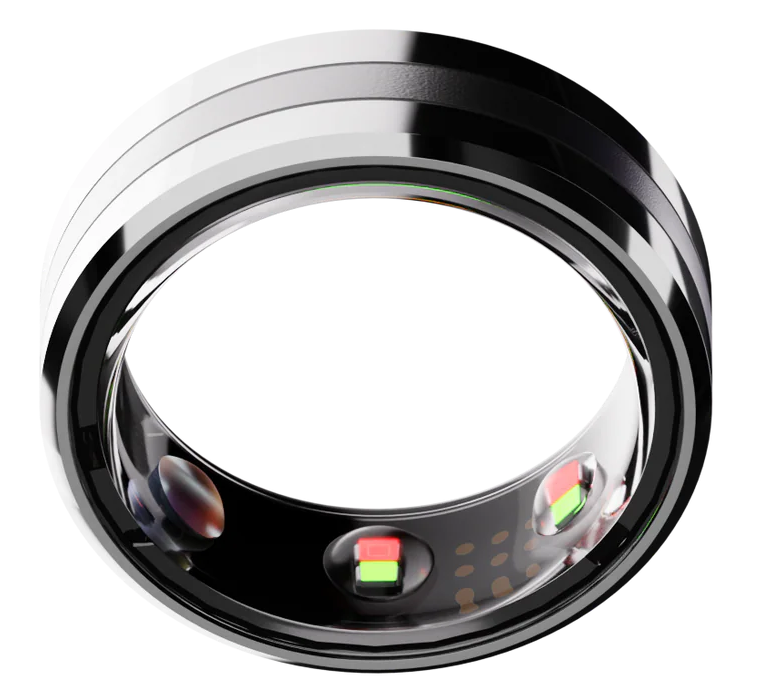
The Signal Ring
A few days ago (July 16), Signal Ring (confusingly the name of the company and its only product) announced a $399 optical ring that reads blood pressure from your finger, continuously, with no cuff and no calibration — "the world's first calibration-free blood pressure wearable," per the company. It is supposed to ship in October.
This gave me a good opportunity to have a closer look at wearable BP technology, something I've been meaning to do for some time.
Monitoring of heart rate, oxygen, ECG, and sleep moved onto our wrists and fingers years ago, but blood pressure has taken longer. One approach has been to build a tiny cuff into the device, and measure pressure directly. A theoretically simpler approach, made possible by advances in AI, is to use an optical sensor to measure different characteristics of your pulse, which can then be correlated to BP. The problem has been to do so consistently, under a variety of scenarios (rising or falling BP, moving or staying still, etc), and most developers have settled on calibrating and recalibrating with a cuff (the gold standard) periodically.
Signal Ring, again, claims that it has overcome the problems.
What's on the market
| Huawei Watch D / D2 | Samsung Galaxy Watch | Whoop | Hilo | Signal Ring | Apple Watch | |
|---|---|---|---|---|---|---|
| Tech | microcuff in the strap | optical (PPG) | optical (PPG) | optical | optical | optical, pattern screening |
| Calibration | none (real cuff) | cuff every 28 days | cuff, initial + periodic | cuff, monthly | none claimed | n/a |
| US availability | no | yes, since March 2026 | yes | launching 2026 | preorder, ships Oct | yes |
| FDA approval | no | no (wellness) | no (wellness) | yes — 510(k), 2025 | no | yes — hypertension screening, 2025 |
| Validated accuracy | to the cuff standard (81060-2) | no | no | to the cuff standard (81060-2) | no | doesn't report a BP number |
The Huawei Watch D and D2 (not currently available in the US) are the tiny-cuff approach: the strap inflates and measures pressure directly, so the numbers are accurate. Both passed ISO 81060-2 — the standard test for a cuff, which checks its readings against a trained observer with a stethoscope across a range of patients — in published studies, including one independent trial. But readings are periodic, not continuous, and it isn't FDA-cleared.
Samsung's Galaxy Watch and the Hilo band use the optical + cuff-calibration approach. Samsung released this feature in the US last March, as a wellness feature it says isn't for medical use. This is a common way around FDA review (see FDA's general-wellness policy), and so at this point it's neither FDA-cleared nor validated. Hilo went the other way, applying for FDA clearance as a medical device. In July 2025 it became the first cuffless monitor to get that clearance, and it is due to launch in the US this year.
Samsung's Galaxy Watch and the Hilo band use the optical, cuff-calibration approach. Samsung reached the US on March 31, 2026, as a wellness feature it says isn't for medical use. This is a common way around FDA review (see FDA's general-wellness policy), and so at this point it's neither FDA-cleared nor validated. Whoop's top band does the same, reporting a daily BP range built on an initial cuff calibration and periodic manual checks — accuracy some users have questioned. Hilo went the other way, applying for FDA clearance as a medical device. In July 2025 it became the first cuffless monitor to get that clearance, and it is due to launch in the US this year.
Apple's watch doesn't measure blood pressure at all. Since September 2025 it reads the optical sensor over 30-day stretches and flags signs of chronic hypertension, then tells you to confirm with a cuff — FDA-cleared as a screening tool, not a BP monitor. It catches under half of hypertension cases, on purpose, to keep false alarms down. Obviously, engineering for lots of false negatives kind of limits the utility.
Signal Ring is the newest entrant, and what got me thinking about the topic. It takes the optical approach, like Samsung and Hilo, but claims to need no cuff calibration at all — more on that below.
Clearance versus accuracy
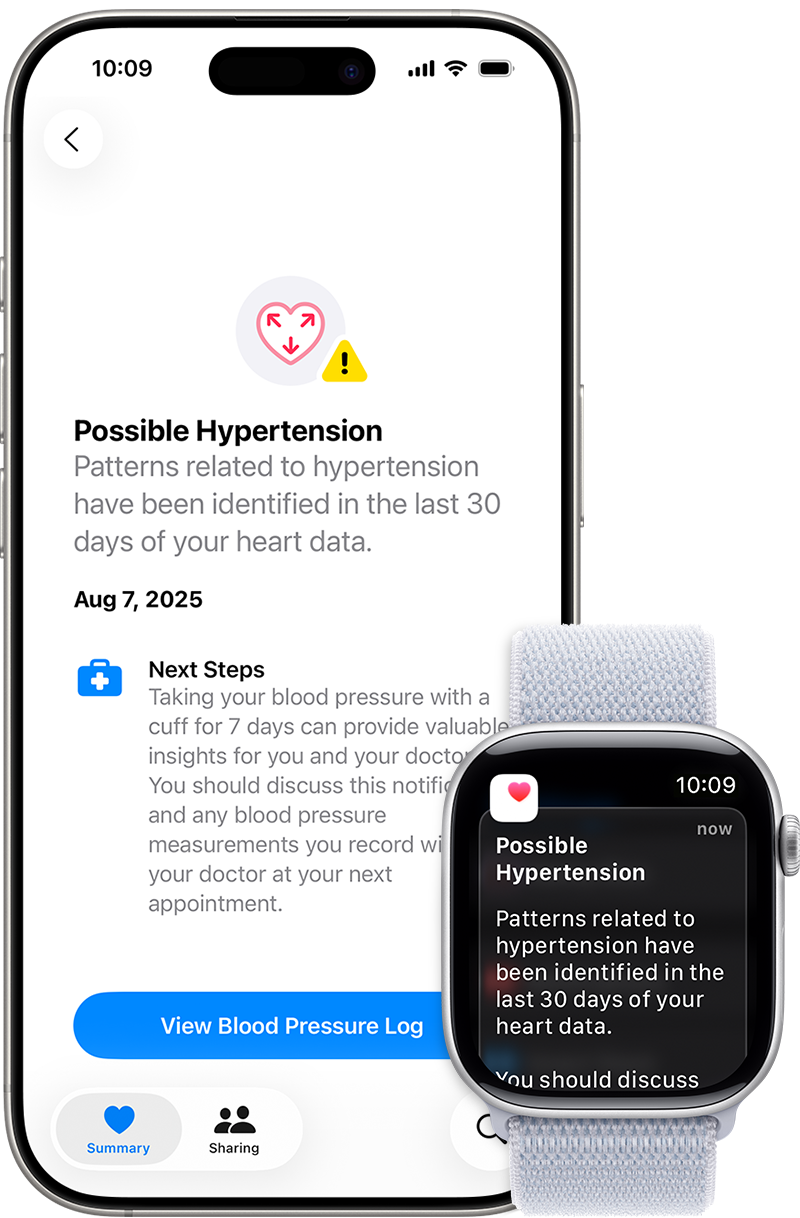
Apple Watch hypertension notifications
FDA clearance is not proof of accuracy. Hilo cleared by comparison to an existing device (i.e. by the 510(k) pathway), not by passing an accuracy standard — though it did validate separately, against ISO 81060-2, the standard for cuff devices. That standard checks a device at rest against a reference.
Unfortunately, and importantly, it doesn't test the two things you buy a cuffless wearable for: following your pressure as it rises and falls, and staying accurate over time without a fresh cuff calibration. A recent review in Hypertension Research (highly recommended) traces the problem to the method itself: most cuffless devices need calibration against a cuff, and their ability to track BP changes is constrained by how stable that calibration is and when it was last done.
Why validate a cuffless device against the cuff standard? Because . . . we don’t yet have a standard for consumer continuous cuffless devices. There is a newer standard for continuous cuffless devices used in the operating room, ISO 81060-3, and validated using an arterial line, but that doesn't fit a device worn in daily life.
When will we have a standard? Hopefully soon. One is being written; but until it’s available, a company can only validate against the cuff standard.
Not an ideal situation, and The American Heart Association's 2025 scientific statement said it plainly: cuffless devices aren't yet accurate enough to diagnose hypertension or guide treatment.
Back to Signal Ring
Signal Ring is the most aggressive entrant on the board. Unlike Samsung and Hilo, Signal doesn’t need calibration — the most annoying part of using these devices — entirely.
Signal is also making the boldest claim in the category, which puts it at the opposite end from Apple. Apple claims almost nothing — screening only, no actual BP number. That’s easy to clear, and a nice addition to their already market-leading product that says "we're working on it". Signal has moved to plant their flag, claiming the first to track BP accurately and continuously, no cuff, no calibration.
Bold claims are nice, but so is data. And so far Signal has published no validation study, met no standard, and holds no FDA clearance.
Bloomberg reports that the company behind the ring — which it identifies as Vital Signals, a name that appears nowhere on the product's own site — has a separate "medical-grade" version in trials at Stanford and three other sites, and claims accurate readings across thousands of participants. But that isn't the device shipping in October, the trial data isn't published, and there's no validation for the consumer ring at all. In a hands-on demo, Bloomberg got some inaccurate readings, which the founder attributed to fit.
Continuous versus periodic: why it matters
The interesting question isn't where blood pressure gets measured. Home cuffs have been around for decades — one of the first elements of the decades-old Monitoring Migration that I've written about. No, the interesting question here is what continuous measurement might show us that periodic BP can't. That's what happened with heart rate, pulse oximetry, and sleep: the value wasn't only in moving them out of the clinic, it was in the constant stream, which revealed patterns a few daily (or annual!) readings missed. Blood pressure varies more than almost any of them — across the day, with stress, with sleep, with medication. I'm betting that continuous BP will show us important things that periodic measurement hasn't.
Maybe we will get that from the Signal Ring, though it's impossible to say at this point because the company hasn't shown us any data. Hopefully that changes before the hardware comes out in October.
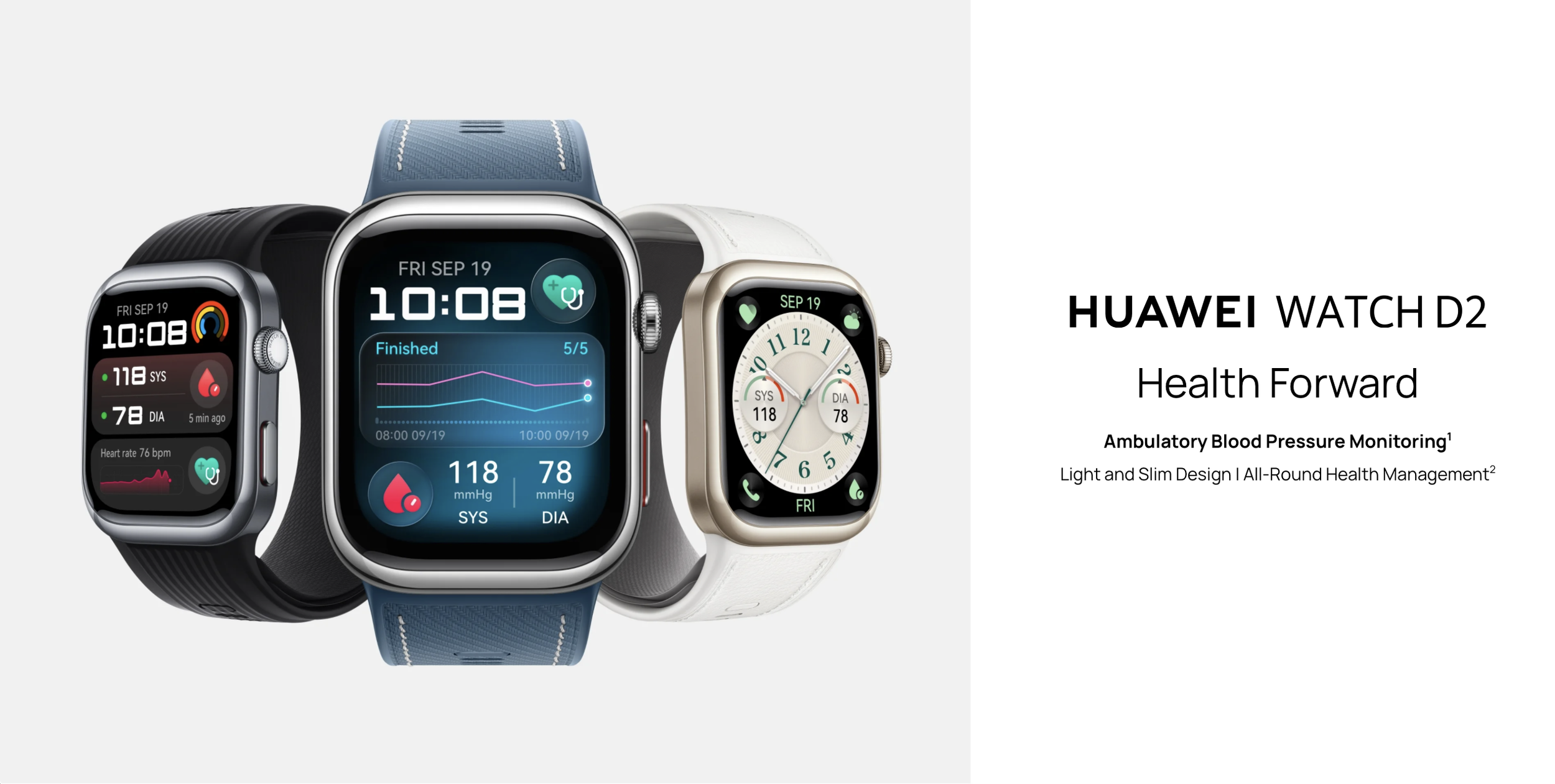
Watch by Huawei. Design by Apple. :)