
Utah's AI Prescription Renewal Experiment Has No Independent Monitor
Utah’s Doctronic AI prescription renewal pilot reports no adverse events, but lacks an official independent audit, active patient follow-up, and a comparison with usual care.
Posts on regulation and liability for medical AI, digital health, and changing models of care.
Every published post with this tag.
Utah’s Doctronic AI prescription renewal pilot reports no adverse events, but lacks an official independent audit, active patient follow-up, and a comparison with usual care.
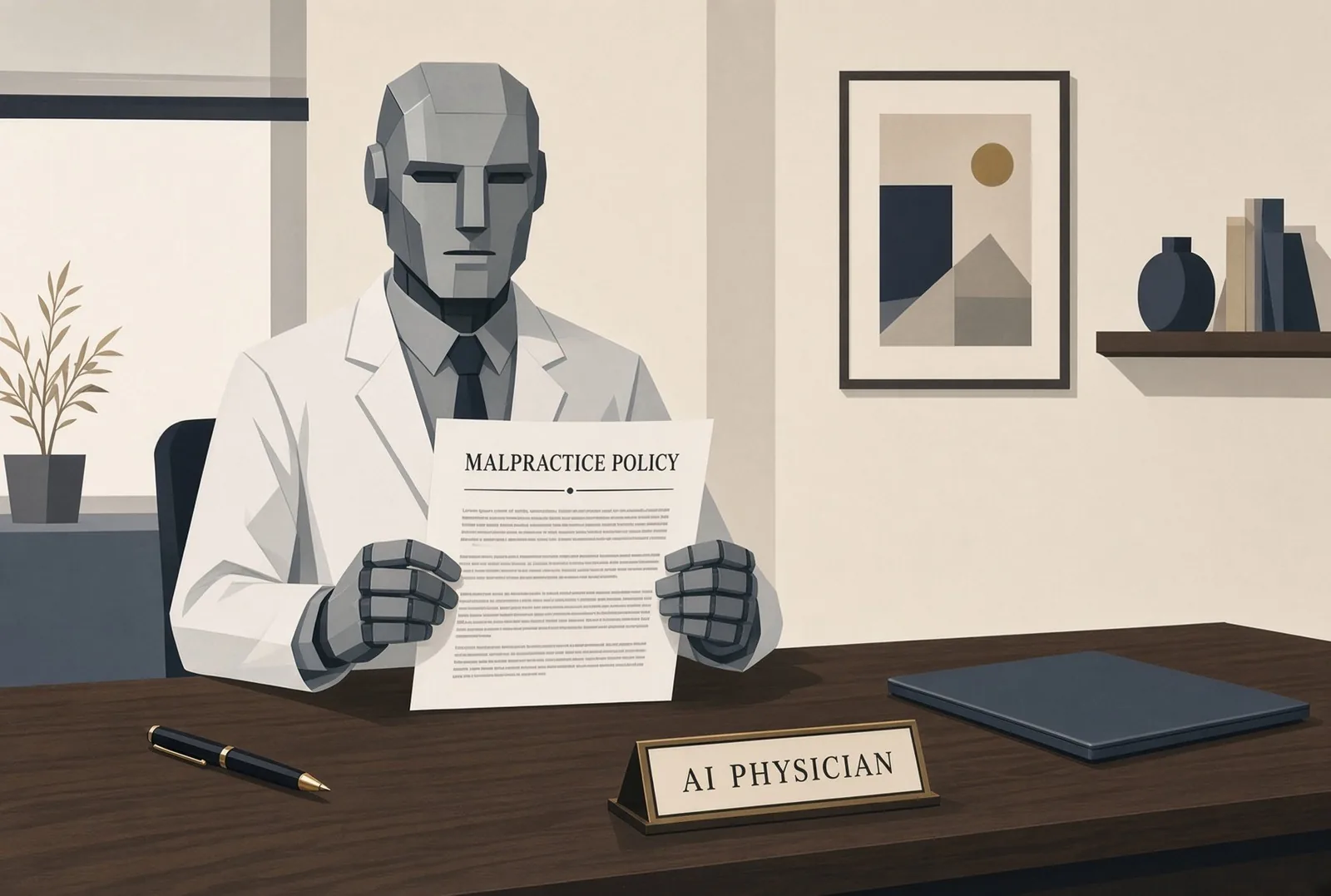
STAT published my letter on Rao and Succi’s “shadow medical system” essay. They had closed with IBM’s 1979 line that a computer can never be held accountable, so it must never make a management decision — but that rule ended in 2018 when AI took out its first malpractice policy.

Signal Ring just announced a $399 ring that reads blood pressure continuously with no cuff and no need to calibrate. A first — if it works. Prompted me to look at where we are with current efforts at BP on wearables from Huawei, Samsung, Hilo, and Apple. Bottom line: no cuff-less device has been validated for continuous use, including Signal Ring.

A prescription acne combination just moved to the open drug store shelf — and the FDA's justification, not the drug, is the story. Treatment Migration continues.
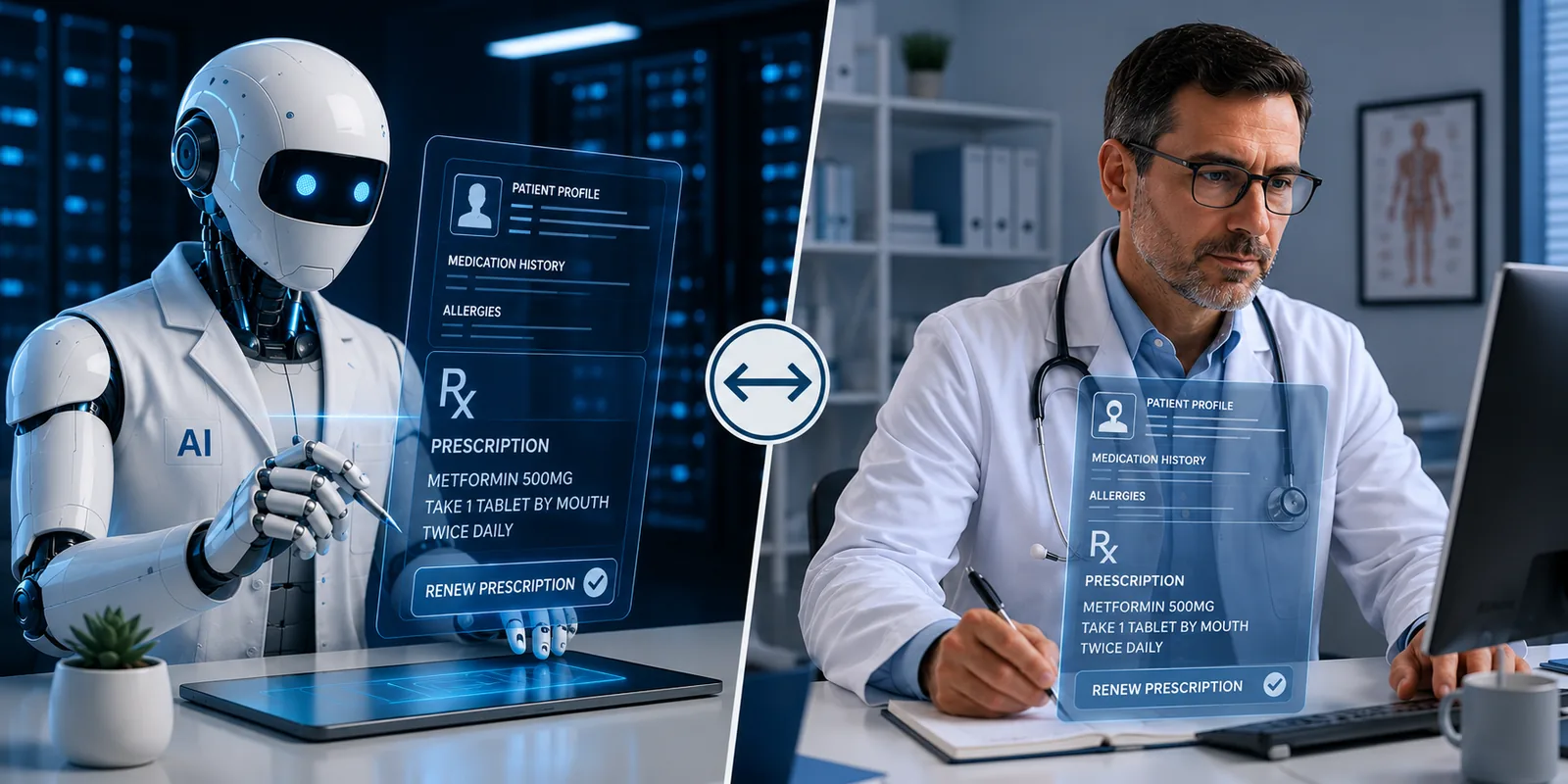
Five months into Utah's Doctronic pilot — the first US program authorizing AI to recommend prescription renewals — the state just released outcome data. The AI's renewal recommendations are statistically indistinguishable from a second physician's. And when the AI defers to a human, it defers more often than a human would.
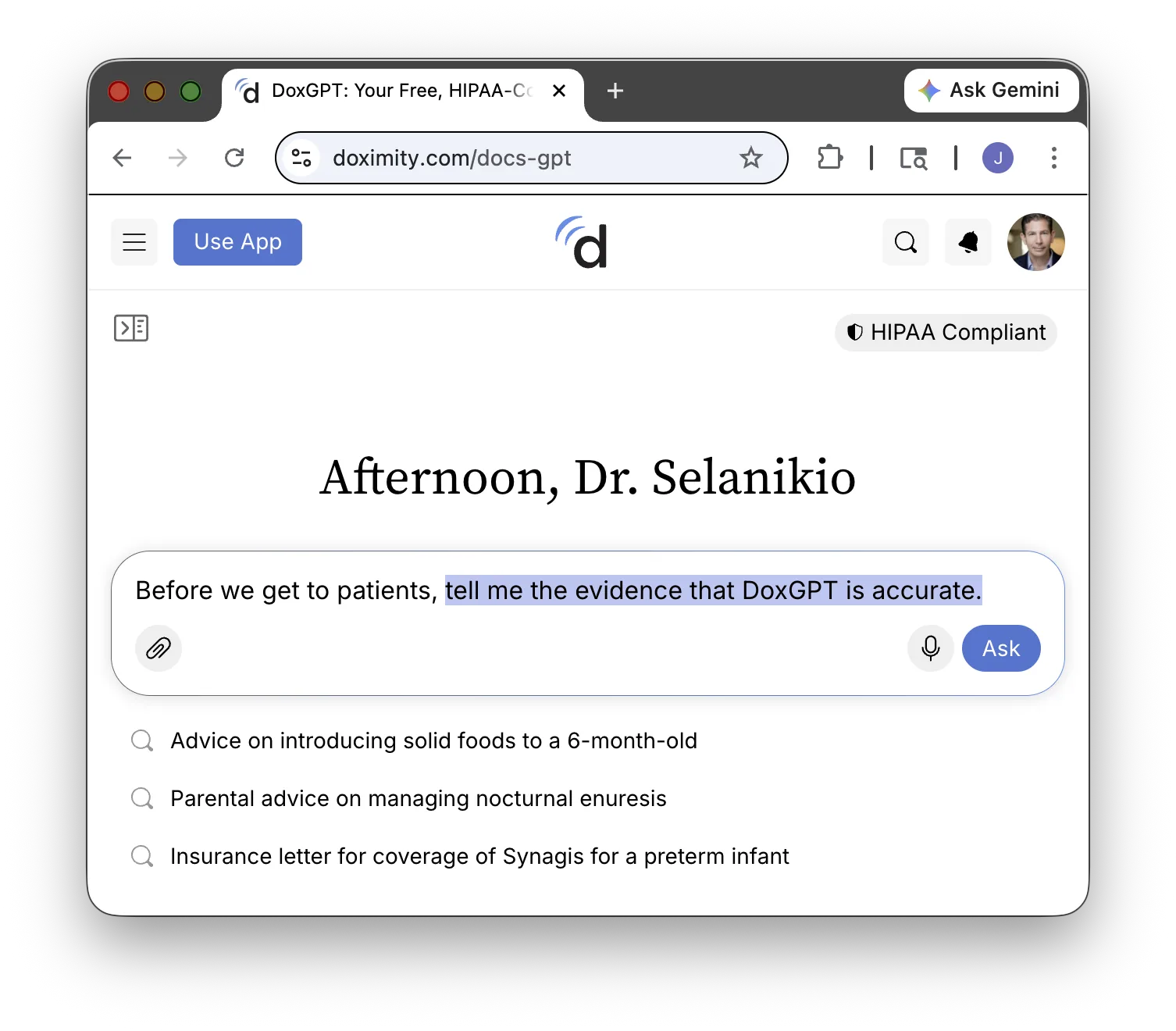
40% of U.S. physicians use OpenEvidence. DoxGPT had 300,000 clinician users last quarter. UpToDate just launched Expert AI. Not one of these tools appears to have been independently tested for accuracy or safety. A profession built on evidence-based medicine is adopting AI with no evidence.
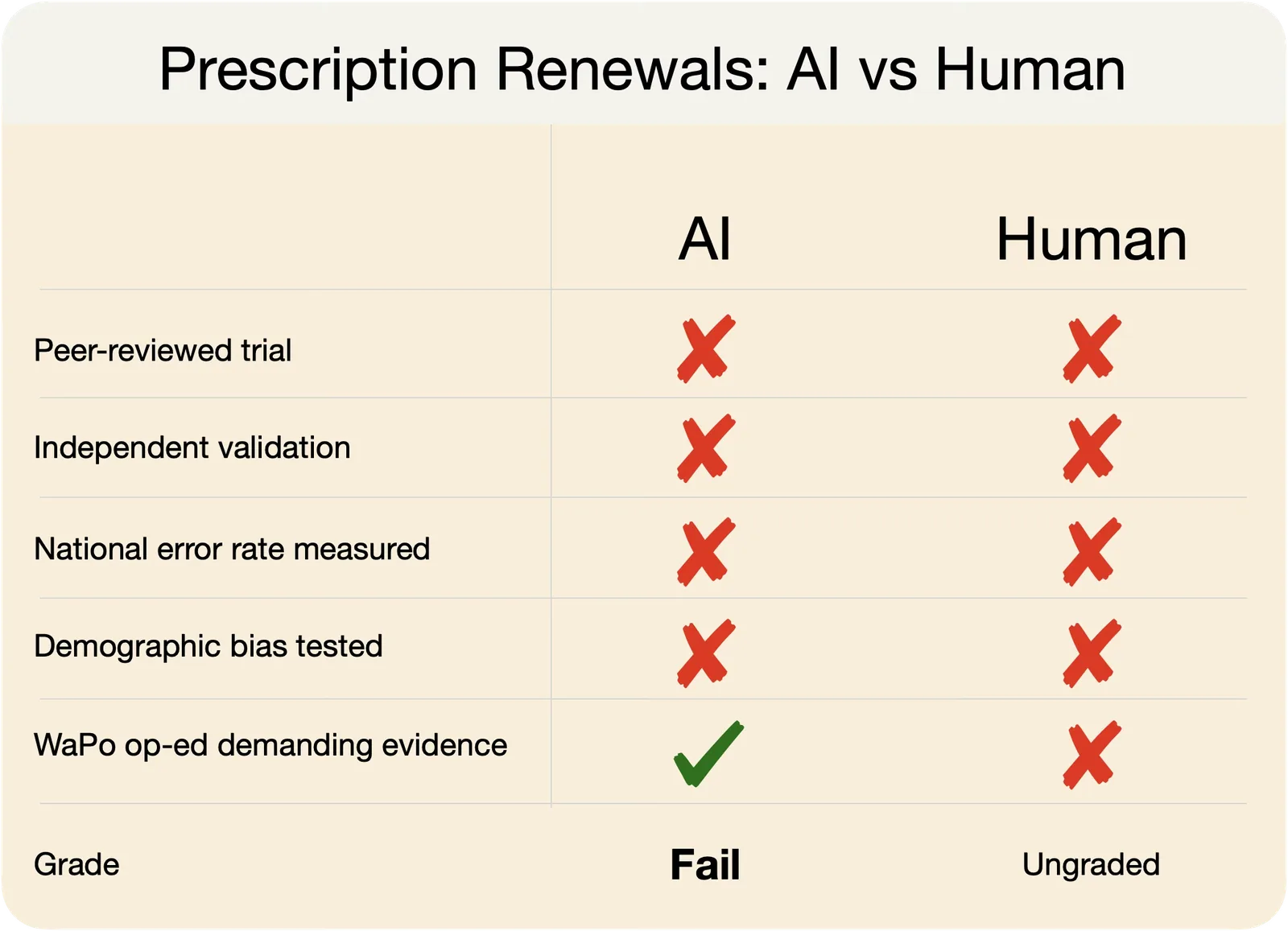
A Washington Post op-ed argues that Utah's AI prescription renewal pilot rests on thin evidence. Fair. But the human renewal process it's replacing has never been rigorously validated either. We're applying a standard to AI that we've never applied to the human baseline.
Medicine has a well-established model for distributing liability across physicians and tools: whoever caused the failure bears the liability. AI vendors have quietly opted out of it — and the contracts they're asking health systems to sign reflect that.
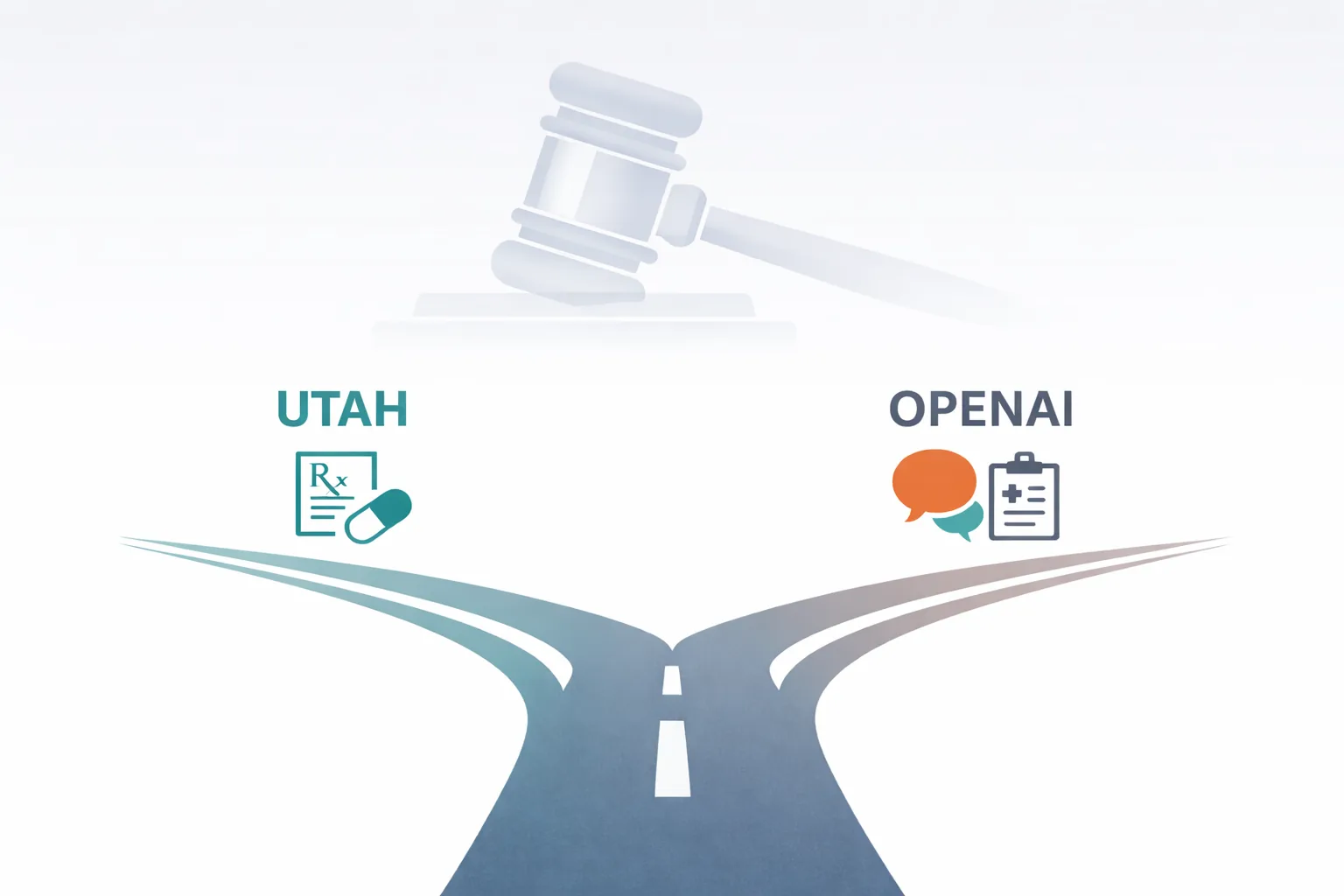
In the first week of January 2026, Utah, and OpenAI each drew a different line around health AI — and liability. Utah’s Doctronic pilot treats AI like a clinician, with malpractice coverage and preserved remedies. OpenAI adds medical-record syncing under unchanged disclaimers and a $100 cap.
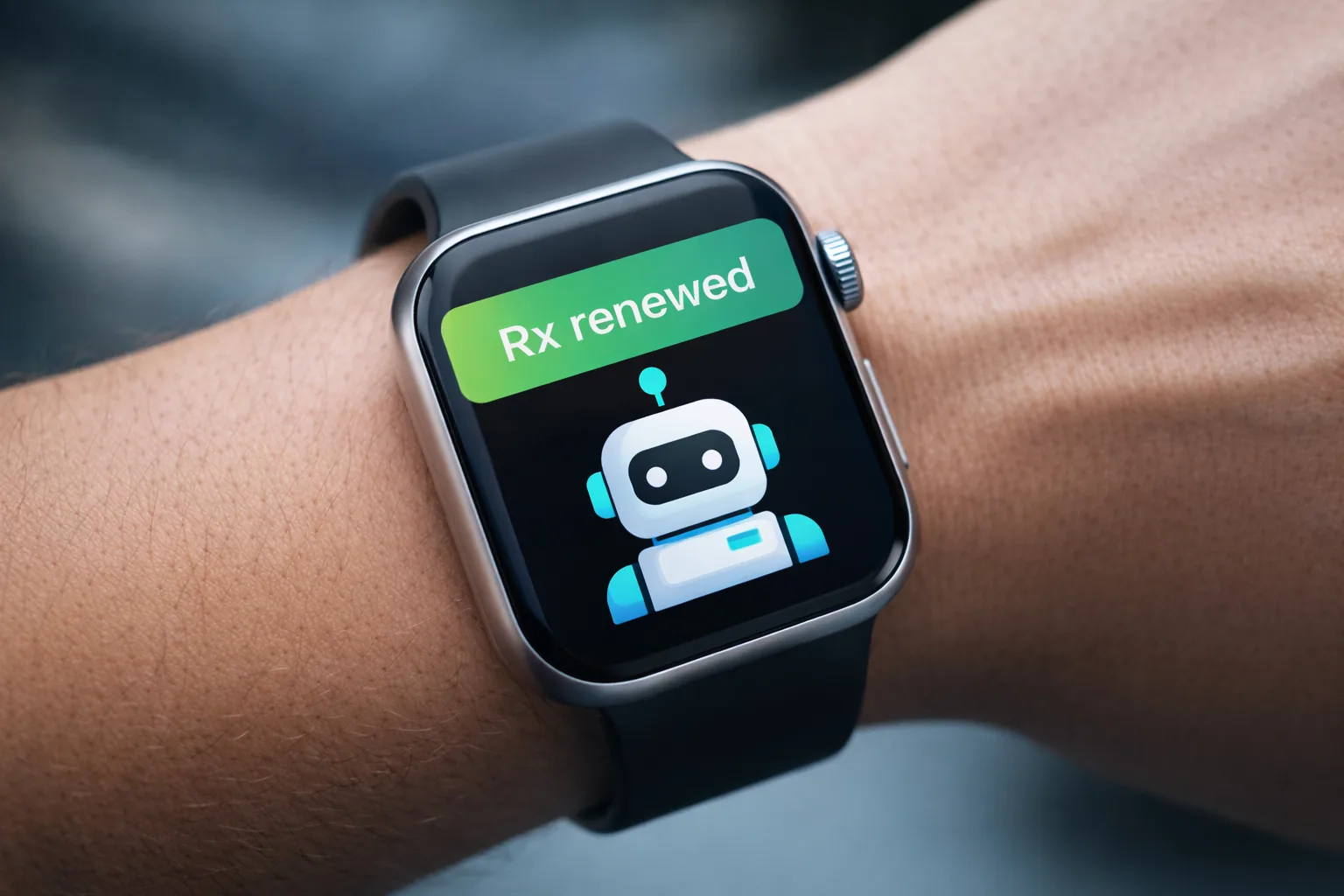
The FDA just updated its General Wellness guidance, allowing consumer devices to measure clinical parameters for coaching — no clearance required. The same week, Utah let AI renew prescriptions with no doctor. Both are doing the same thing: moving healthcare tasks out of traditional systems and into consumer channels.

Blue Cross Blue Shield of Massachusetts just posted a $400 million loss — the worst in their history. The culprit? GLP-1 medications that could eventually save insurers billions. The costs hit today, the savings arrive years later, and health systems are caught in the middle.

Lawmakers are moving to ban AI-only insurance denials, requiring human sign-off for every case. It sounds compassionate, but it locks us into the same slow, opaque, costly system. The smarter move is AI with guardrails — transparency, audits, and contestable rationales — for faster, clearer, more accountable decisions.
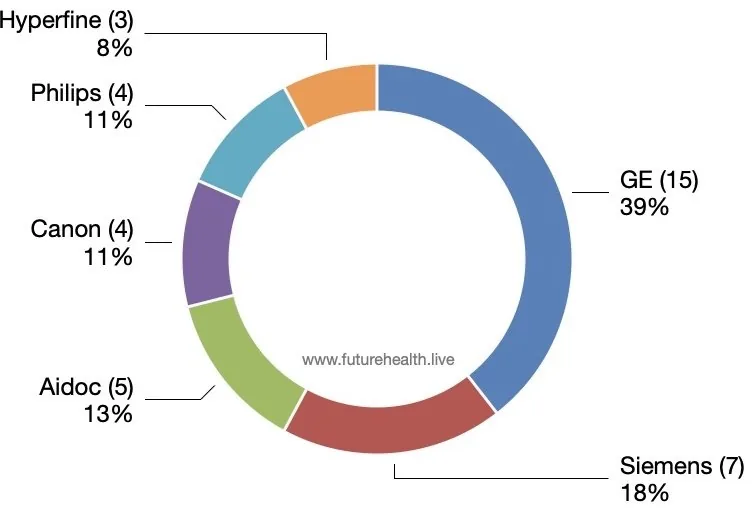
One year after analyzing FDA’s AI medical device approvals, a new dataset confirms: growth continues, but acceleration is absent. While more young companies are joining the field, older firms like GE still dominate approvals — classic sustaining innovation. And Big Tech? Still barely on the board.
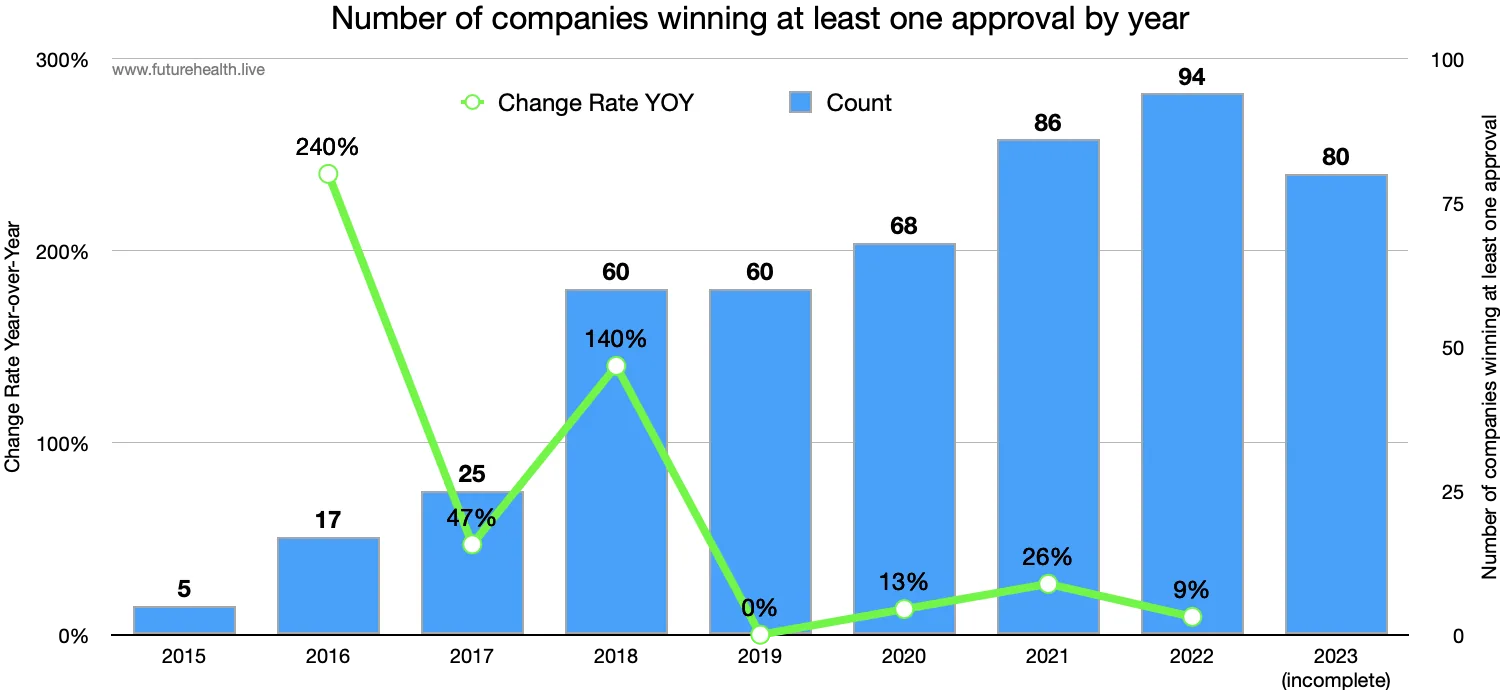
FDA approvals of AI-enabled medical devices are accelerating — but not in the way you might expect. While new startups are entering the space, the real winners remain legacy giants like GE and Siemens. An analysis of the latest FDA data reveals a classic case of sustaining innovation, not disruption, as established players integrate AI to reinforce their dominance.