Signals: Apple Found a Link Between Hearing and Mobility Just by Looking at Data From iPhones
Last week I wrote about VO2 max — a number that strongly predicts mortality and that primary care does not measure. Here is another one: walking speed. Apple's iPhone has been measuring it passively for hundreds of millions of people. The Apple Hearing Study just confirmed, in 57,183 of those iPhone users, that lower walking speed is highly correlated with worse hearing — and the association held after adjustment for age and sex, and was strongest in adults 60 and older. (WSJ coverage here.)

Medical research in motion
This isn't a one-off paper from Apple. Their “Apple Hearing Study” launched in November 2019 with the University of Michigan School of Public Health and the WHO. It now has 160,000+ consented participants, is designed to run at least ten years, and has never used a sound booth. Every six months, participants take pure-tone audiometry on their own iPhones, using EarPods or AirPods. The methodology was validated against clinical sound-booth audiometry in a separate study — and that validation is what allowed the same in-ear audiometry to become an FDA-cleared OTC Hearing Test in 2024, now in 150+ countries.
In effect, Apple used the sound booth to train the sound booth’s replacement.
A second finding, easy to miss: among ~85,000 participants who tested within the WHO "normal" hearing range, 16% still rated their own hearing as fair or poor, and many reported real-world listening difficulties. So it seems that the clinical definition of “normal hearing” may need to be adjusted based on consumer health data (this won’t be the first time this happens, I guarantee).
Two main points matter here from the consumer health tech perspective, and neither is the hearing-mobility link itself (which prior research already suggested).
First, the measurement. Walking speed is one of the strongest predictors of all-cause mortality in older adults — but like VO2, primary care does not measure it. Apple's iPhone has been measuring it passively, for every user who carries the phone, since iPhone 8 — automatically populating the Health app whenever someone walks with the device in a pocket or a waist pouch. The 57,183-person analytic sample is a tiny slice of the deployed sensor base, which runs to hundreds of millions of devices in the US alone. The Monitoring Migration is not theoretical — it is shipping at a scale primary care cannot approach.
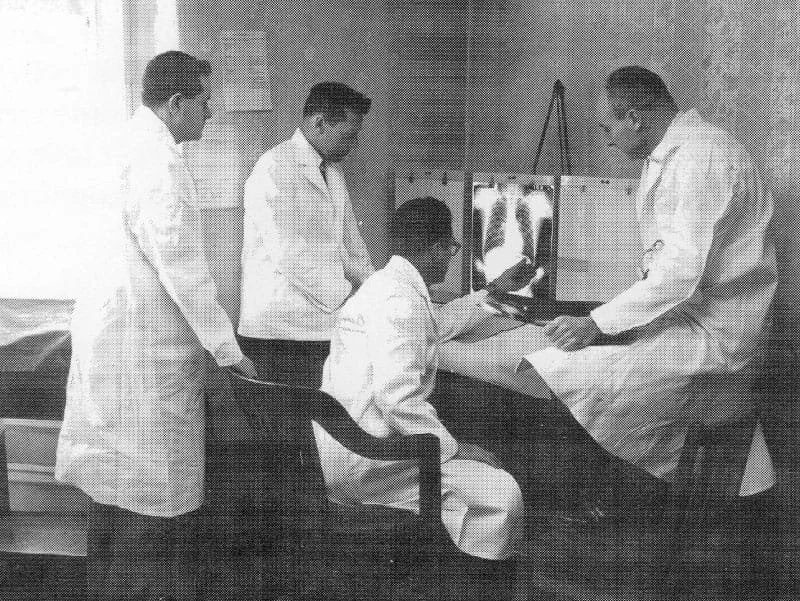
Framingham: that old-time medical research
Second, the infrastructure. 160,000 participants — no clinic visits. Biannual clinical-grade audiometry — at home. Continuous passive gait, sleep, and heart-rate data — at home. Near-zero marginal cost per enrollee. No sound booths, no field staff phoning participants to schedule them. Michigan epidemiologists designed the protocol and did the analysis; everything in between was the iPhone.
The Framingham Heart Study took roughly 75 years to enroll about 15,000 people across three generations. Apple's hearing cohort is ten times larger and was assembled in five.
The Five Migrations describe healthcare tasks moving from the clinic to the consumer. This study is a reminder that medical evidence production (i.e. research) is moving the same direction — and the clinical system will increasingly find itself using research it did not produce, about activity and indicators it cannot measure, generated by devices it does not control.