The Ring is the New Front Door
The Oura Ring 5 shipped last week. Press coverage focused on the hardware: forty percent smaller, week-long battery, a titanium band that finally looks like jewelry. The more important news is a single partnership, and the business strategy it represents.
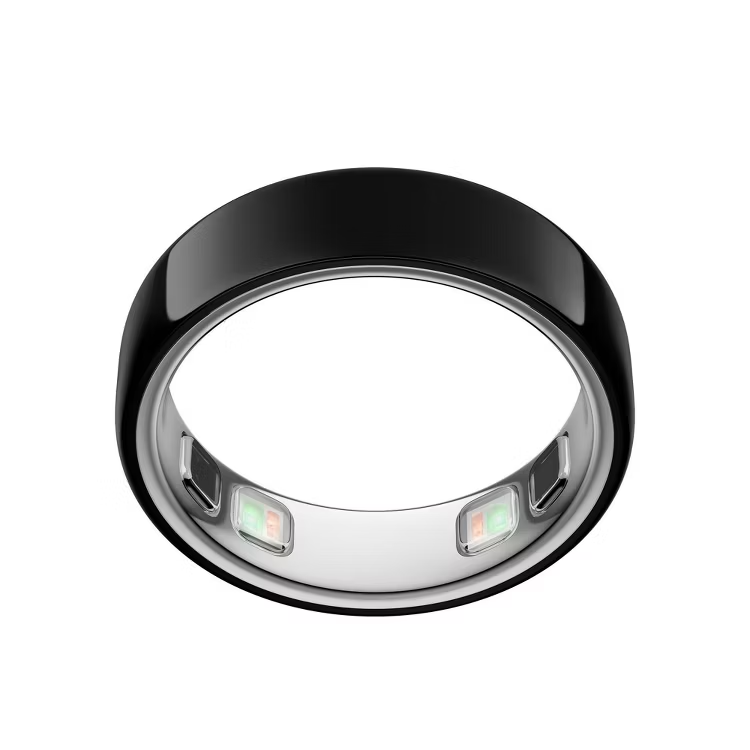
Knock, knock!
Starting June 16, Oura is rolling out Counsel Health inside the Oura app — members in 43 states can ask a health question, get advice from a medical AI, and pull a licensed physician into the conversation when needed. The device stops being a tracker. It becomes the front door to care.
I've been arguing for two years that healthcare tasks are migrating out of the exam room — Knowledge, Diagnosis, Treatment, Monitoring, Interpretation. A single $399 consumer product is now assembling all five at once. The ring monitors. The AI interprets and diagnoses. It answers the questions people used to save for an appointment. When a prescription or referral is needed, Counsel routes you to a physician. The physician is still there — but he’s now a feature you summon immediately rather than a visit you schedule two months in advance.
This is not one company's bet
Whoop announced on May 8 that it will roll out on-demand video consultations with licensed clinicians this summer, a paid add-on. Each clinician opens the consultation already knowing the member's recovery scores, resting heart rate, and months of strain data.
Whoop and Oura both position these clinical features as supplements to primary care rather than replacements. That wording is deliberate. In July 2025, the FDA sent Whoop a warning letter over its Blood Pressure Insights feature, saying the company was marketing an unauthorized medical device intended to diagnose, treat, or prevent disease. Six months later the FDA issued new guidance permitting optical blood pressure sensing in wellness devices, provided they make no medical-grade diagnostic claims. The "supplement" framing is what keeps these products in that wellness lane and out of the medical device pathway — the lane the industry helped define.
Oura has been here before. In June 2025 it partnered with Maven Clinic to route ring data into providers' treatment plans. The Counsel deal a year later is the more aggressive move — it brings the provider into Oura's app rather than sending Oura's data into the provider's workflow.
The pattern is roughly the same each time: a continuous biometric stream, an AI layer that interprets it, and a clinician available on demand. That sounds a lot like a health system, doesn’t it: it measures you, it interprets the measurement, and it connects you to a doctor. The wearable companies have reassembled those functions outside the hospital, on a subscription, for the price of a copay. Oura and Whoop might be leading this, but others will follow and it is too soon to pick winners.
What this means for health systems
For a hospital CEO, the temptation is to file this under consumer wellness and move on. The rings aren't FDA-cleared diagnostic devices, the consults are explicitly positioned as supplements, and the volume is still small. This is beside the point.
The front door is a sales funnel: it directs patients to higher-level care. That higher-level care is where a health system makes its money. The office visit rarely paid much; the referrals it generated did — the cardiology workup, the MRI, the surgery. A ring that answers "is this chest pain worth worrying about" now sits at the mouth of that funnel, deciding which questions become referrals and which never leave the app.
When they tell you who they are, believe them
Health systems understood the value of the front door years ago. The whole digital-front-door movement — the patient portals, the symptom checkers, the virtual-first plans, the apps that promised to be the first place a patient looked — was an attempt to own first contact before someone else did. The instinct was correct. The execution lost to companies that started with better data, better software design, and no waiting room. A patient opens the hospital portal to request an appointment three weeks out. She opens Oura and has an answer in seconds, with her own biometrics already in the chat.
The wearable companies aren't trying to build hospitals, but they are working to capture a lot of what we traditionally think of as healthcare. For someone who is basically healthy, a system like this may eventually handle the majority of their healthcare interactions: answering a question about a medication, flagging a trend worth watching, routing to a physician when the AI hands off. These are largely interactions that pass information back and forth.
The clinical system will have trouble seeing this shift. Most of these interactions generate no bill — the monitoring, the AI interpretation, the health coaching have no CPT codes. The in-app telemedicine visits are direct-pay subscription add-ons, following the same cash-pay model as Ro and Hims — deliberately outside the insurance system. The dominant DTC telehealth players have always worked this way: margins approaching software, no reimbursement negotiations, no claims data. None of this appears in the databases that health system planners and regulators depend on. The demand leaves the system before it can be counted. Health systems won't miss it until they feel it in their census numbers — and by then, it will likely be too late.